Autumn Wholesomeness

IMG_0955-2

A friend once told me “you’re very seasonal!”. Initially perplexed by the note, I soon became captivated by its accurate portrayal. While I think that in the grand scheme of things I look for a well-crafted routine in life, which gives me a sense of security, stability and structure; every now and then, I pursue renewal and stimulation. Mother Nature gives me a helping hand by providing the ultimate rejuvenation: Seasons!

So Yes! I am very seasonal in the sense that I love living every season to the fullest: I wear the season, eat the season, and connect with nature through each season’s unique richness. Back in my hometown, autumn was the joy of petrichor after the first rain, the smell of my new schoolbooks, the sight of wheat harvest and bulgur production and the savor of green mandarin. Since I moved to North America, with every fall I look forward to my yearly apple picking, getting lost in picturesque foliage sceneries and savoring the season’s richest tastes. Eating local in-season produce is the best way to really benefit from the freshness, deliciousness and nutritional content of vegetables and fruits while supporting sustainable agriculture. Here are my autumn superfood picks from around the world. Choose a variety from this list to get your daily intake of vegetables and fruits. The best way to get what’s in season in your local area from the following list is to head to your local farmer market and see what treasures you can fill your basket with.
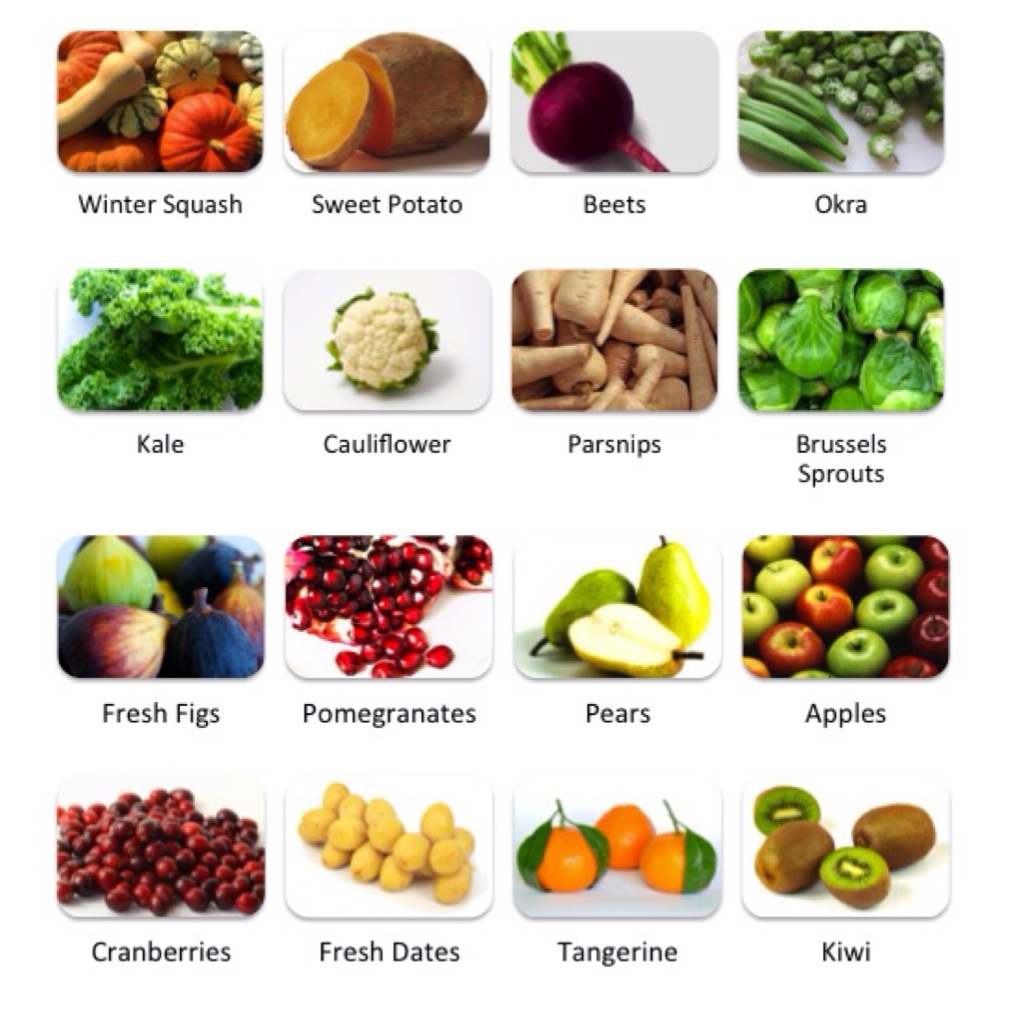
photo-52

Top: Nothing better than the comfort of a smooth pumpkin soup to adjust to the crisp cool air Bottom: Mix your autumn produce in this delicious medley in-salad! (Ingredients: any green leafy vegetable, roasted apple, roasted chestnuts, grapes, cranberries, baked sweet potatoes, feta cheese)

Top: Nothing better than the comfort of a smooth pumpkin soup to adjust to the crisp cool air
Bottom: Mix your autumn produce in this delicious medley in-season salad! (Ingredients: any green leafy vegetable, roasted apple, roasted chestnuts, grapes, cranberries, baked sweet potatoes, feta cheese)

Bring the colors home Top right: autumn wreath Top left: coffee table decoration Bottom right: flower arrangement Bottom left: seasonal Baccarat table set-up

Bring the colors home
Top right: autumn wreath
Top left: coffee table decoration
Bottom left: flower arrangement
Bottom right: seasonal Baccarat table set-up

Apple & Pumpkin picking in the Hudson Valley, NY

Apple & Pumpkin picking in the Hudson Valley, NY
Eat Green

Kale juice

Kale juice

Since I moved to New York, I have come to notice that people here are fad obsessed, particularly in relation to body image issues. They enroll in the latest and hottest mumbo jumbo celebrity workouts with the funkiest names ever like “Zumba!”, they follow the latest diet or un-diet (fasting) trends like the 5:2 diet, the master cleanse detox, lemon juicing diet, raw food diet…but what particularly caught my attention is the kale craze! New Yorkers love kale! They swear by kale juice, feast on kale salad and sandwiches and snack on kale chips. There’s even a National Kale Day (which happens to be today by the way, Happy Kale!). Don’t get me wrong, I have nothing against kale and I’m actually a big fan myself of kale Tabboule and appreciate the nutritional benefits of this wonderful green veggie. I do feel however that there’s an excessive adoration of kale, which distracts from other interesting veggies that correspond to the same green category, have a very similar nutritional profile to kale and some are even more worthy of being singled out. So if you’re like me, tired of kale or even spinach but want to keep benefiting from the amazing nutritional and gastronomic qualities of green leafy vegetables, it’s time to introduce your cuisine to chard!

Chard is very comparable to spinach but with a bigger leaf and has a less accentuated taste than kale.  Just like the venerated kale and Popeye’s spinach, chard is a great source of fiber, vitamin C, vitamin A, magnesium and potassium, contains iron, calcium and folic acid. Also note that it’s slightly lighter in calories than kale and spinach and is a good laxative and diuretic. There are so many ways to enjoy chard, here are some of my favorites:

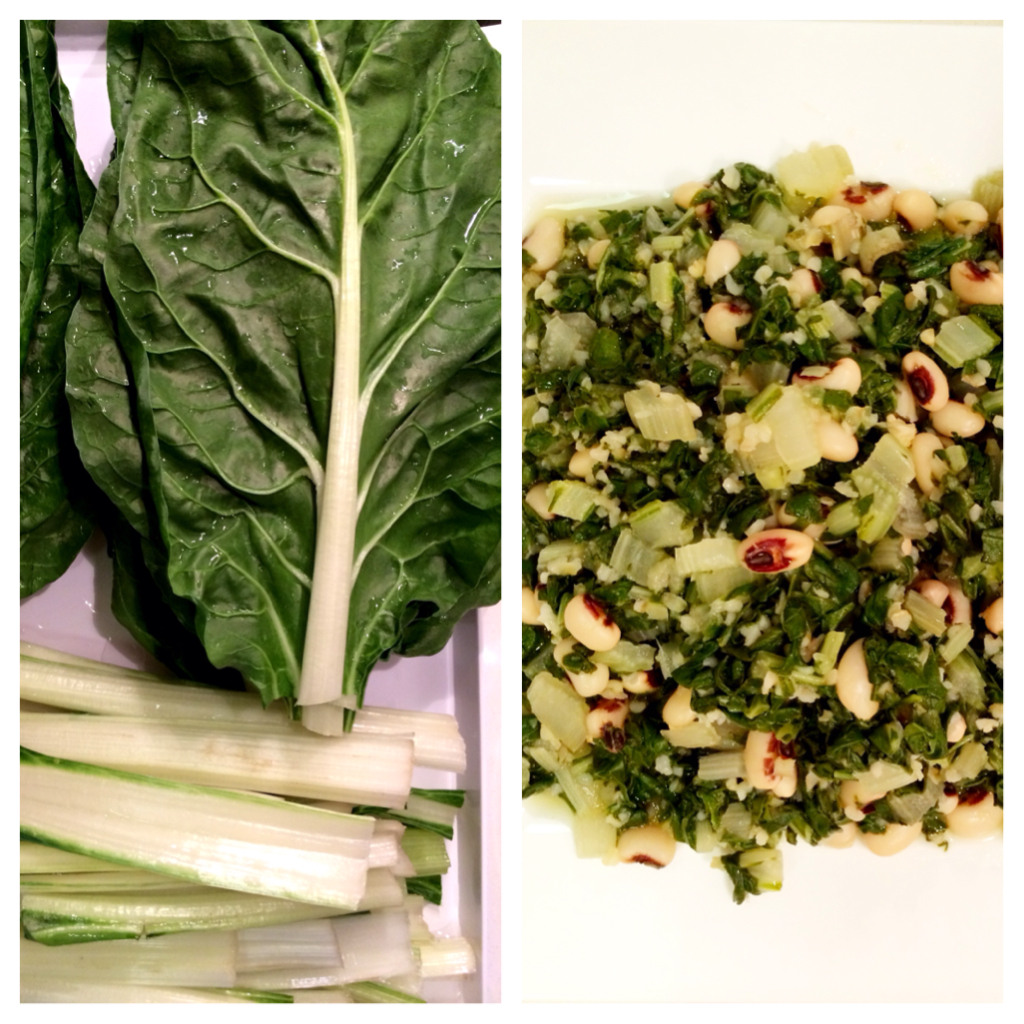
Zesty chard salad / appetizer with blackeye peas

Zesty chard with blackeye peas salad / appetizer

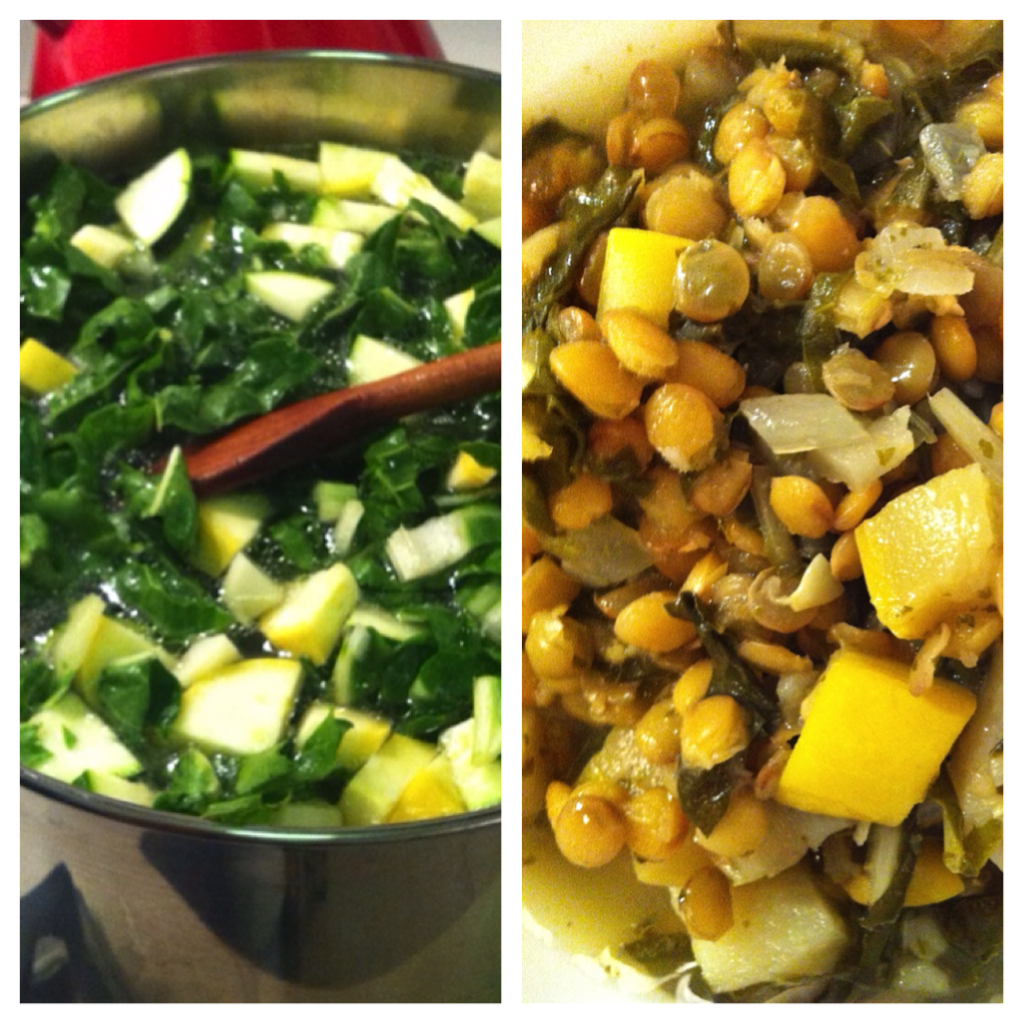
Chard and lentil soup (also includes zucchini, potato and onions)

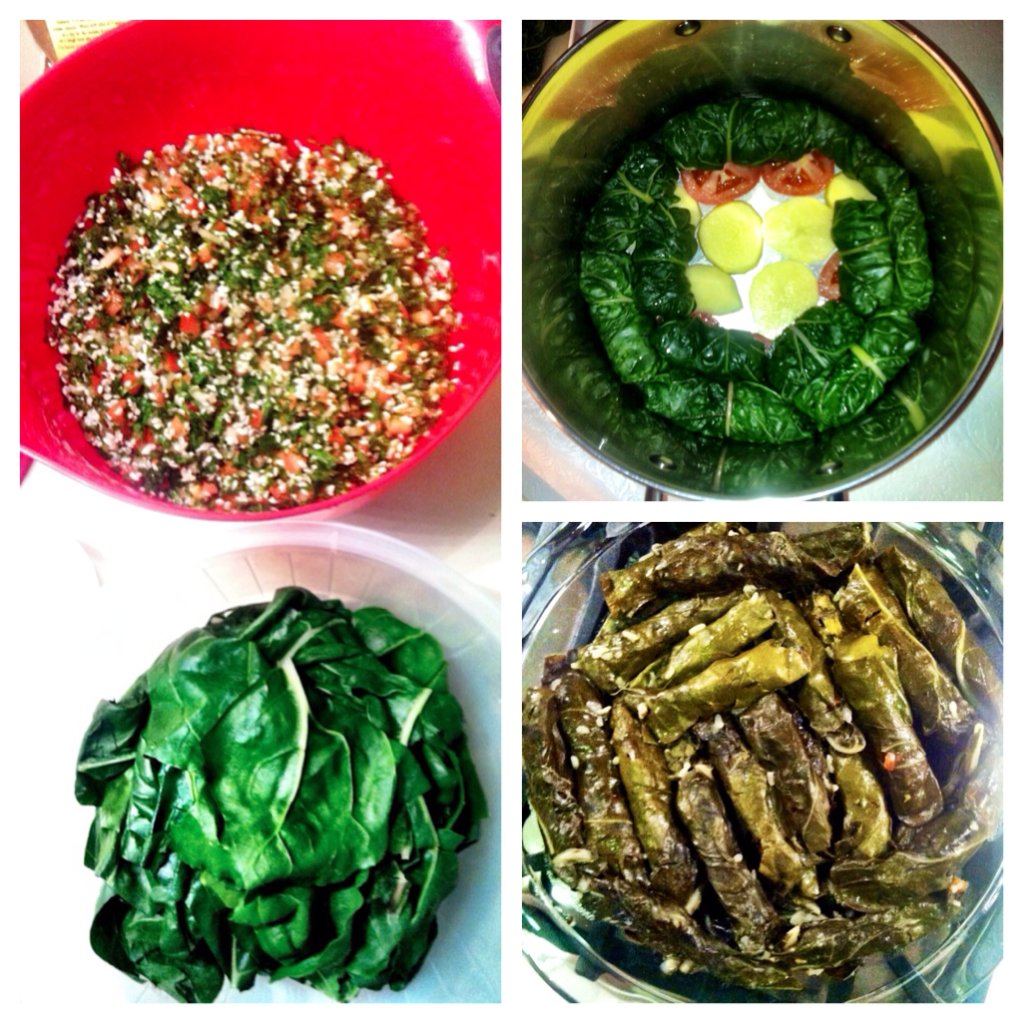
Chard stuffed with a Tabbouleh-like mix

Chard stuffed with a Tabbouleh-like mix

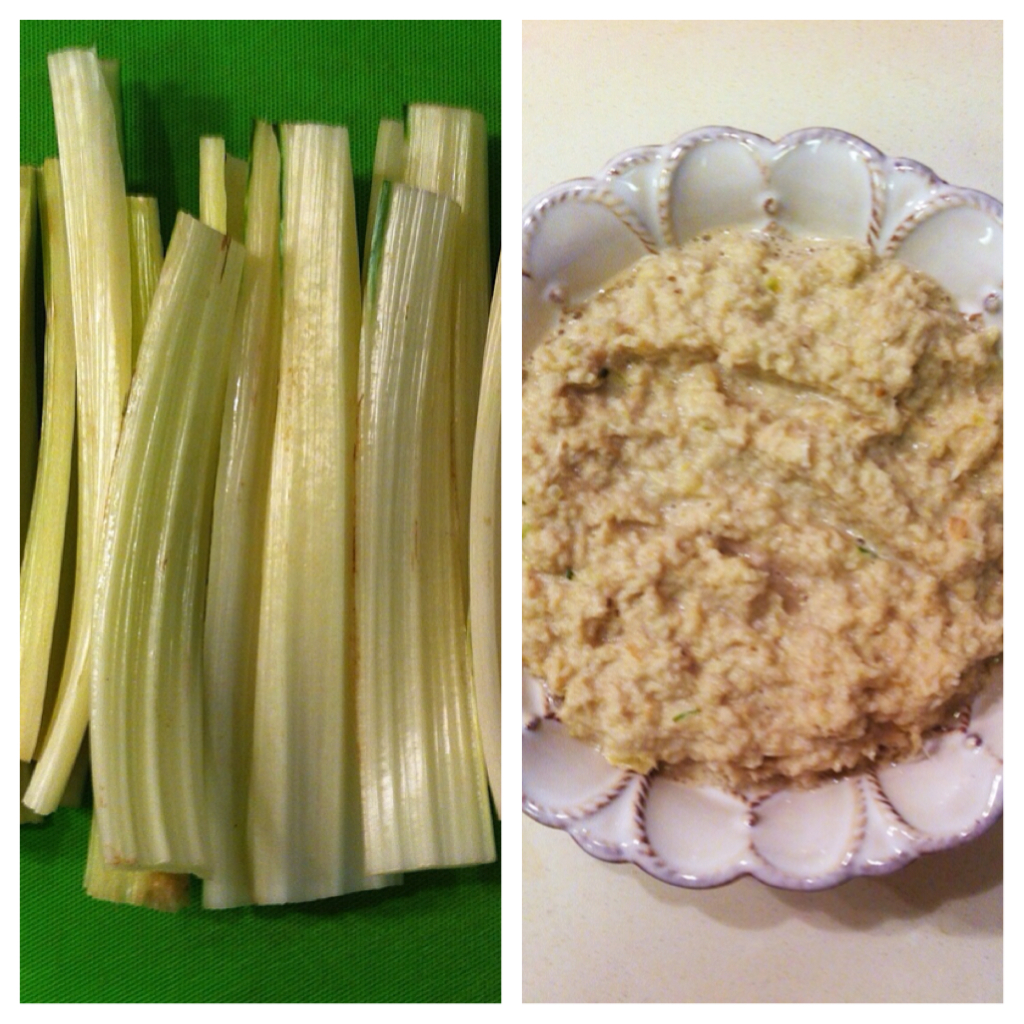
Chard dip (prepared in a similar way to hummus, but since we're replacing chickpeas with chard, it's lighter in calories)

Chard dip (prepared in a similar way to hummus, but since we’re replacing chickpeas with chard stems, it’s lighter in calories)

Sugar Substitutes and Pregnancy

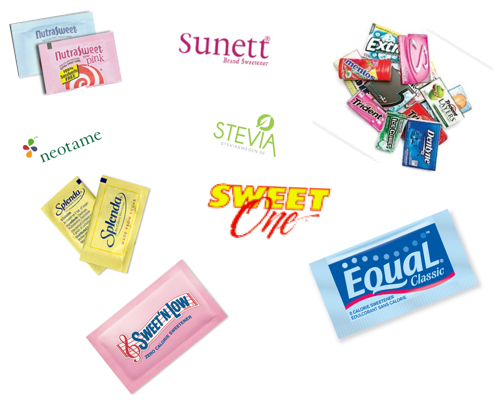
Sweeteners

A lot of controversy surrounds the safety of artificial sweeteners. Most health professionals consider the majority of such sweeteners relatively safe during pregnancy. Some professionals however recommend avoiding them altogether during that period and associate their use to birth defects. Scientific research regarding their general safety is still unfortunately neither comprehensive nor absolute. The ideal approach a pregnant woman can take during her 9 months of gestation is to be prudent and limit her use of such chemical additives. Pregnancy is not the right time to cut on calories anyways so it might be just fine to replace the artificial sweeteners with sugar or honey when you inevitably need that sweet taste (except if you are dealing with carbohydrate intolerance such as gestational diabetes, in which case you need to consult your doctor or your dietician to discuss regulating your sugar consumption). Moreover, a lot of processed foods that contain sugar substitutes are not necessarily calorie-free nor (like in the case of diet soft drinks) do they provide you and your fetus with essential nutrients you both need.

Whatever position you decide to take in relation to artificial sweeteners, you should absolutely avoid Saccharin during pregnancy because it’s proven to be capable of crossing the placenta and getting to your fetus’ developing tissues. Additionally, you should note that the US banned the use of Cyclamate based on some studies that have shown a link to bladder cancer.

Other sugar substitutes like sugar alcohols (such as Maltitol and Xylitol found in sugar-free chewing gums and some other processed foods) are not a big concern when it comes to safety but they do cause digestive problems if you go overboard or in case of a regular intake. Since you are already vulnerable to such discomforts by virtue of being pregnant, you probably don’t want to add to them!

Bringing Veggies Back!

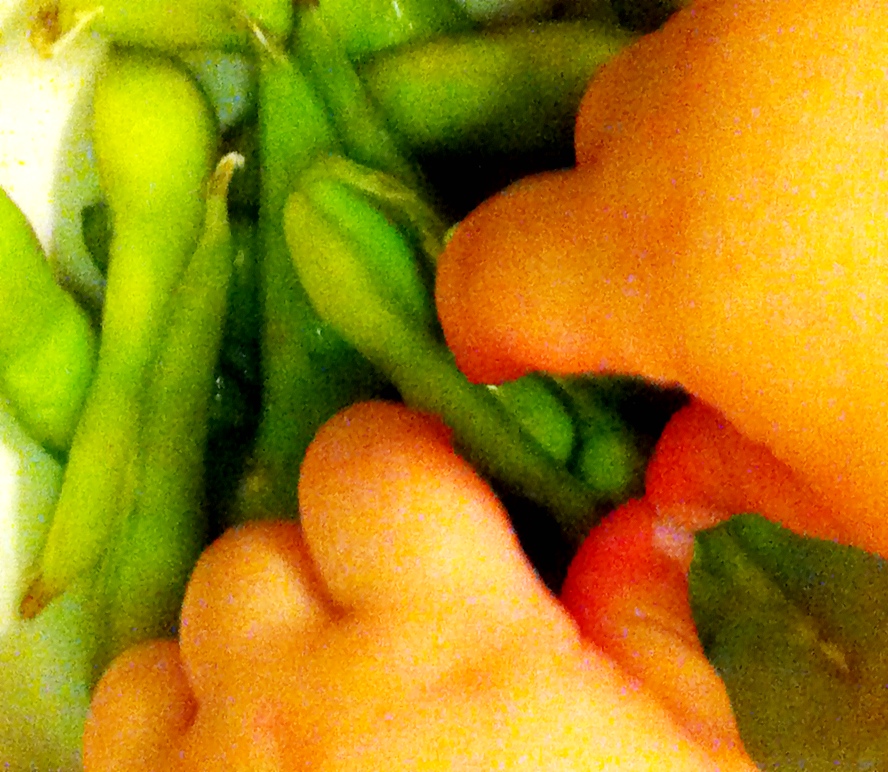
Edamame

Whether at your doctor, the dietician clinic, in health awareness ads, books and magazines or through Michelle Obama’s inspiring anti-obesity campaign, you’ve probably been lectured one way or another about the importance of “getting your kids to eat their veggies!” Still, many kids have little or no interest in eating vegetables and therefore lack essential nutrients in their diet. Here are my TOP 5 TIPS on making sure you get your child on the right veggie-track:

  1. Start early because your kid’s food preferences are like pottery and become harder to change as they solidify with time.
  2. Be consistent and proactive in making sure that you offer your kid healthy choices and avoiding that your precious little one develops a picky-eater habit.
  3. Make this a family project by setting a good example and making sure that any brothers and/or sisters are setting a good example as well. Kids love emulating their parents and siblings.
  4. Make food time fun by letting your kid count his peas, learn how to say the color of a carrot, the texture of a spongy eggplant (yes a raw eggplant!) and laugh at the bizarre new taste of a lemon!
  5. Give your kid some autonomy with the veggies! Kids love to discover things on their own and can develop an aversion to things when they are forced upon them. So as the choking hazard dissipates, let your kid enjoy some healthy veggie food finger choices: Fava beans, chickpeas, celery, cucumber and red pepper sticks, cherry tomatoes and steamed Brussels sprouts (cut in halves), steamed broccoli, cauliflower and asparagus…

You’ll be surprised how moldable kids are at an early age! In no time, they’ll be looking for the spinach in their plate and snacking on celery!

My 2-year-old daughter loves the sweet-ish nutty taste and tender texture of edamame. Many think of edamame simply as a bean appetizer at their favorite Japanese restaurant but their benefits far surpass this occasional treat. Edamame soy beans are usually sold in frozen packages in most grocery stores and make a great addition to one’s diet either as a snack, an ingredient in stir-fried or sautéed dishes or in a soup. They have the veggie baggage (rich in fiber, vitamins, minerals and antioxidants) boosted with rich protein content making them a meat substitute and also contain a small amount of unsaturated fat (the good type of fat). My daughter usually enjoys them as a snack but when there is no cooked meal in sight, I throw a bunch of steamed edemame in a plate, coupled with some cubes of cheddar cheese and some cherry tomatoes and Voilà! Lunch is ready!

Keep an eye out for allergies as you are introducing new food to your child’s diet. In effect a small percentage of children are allergic to soy. 

Burst of Antioxidants

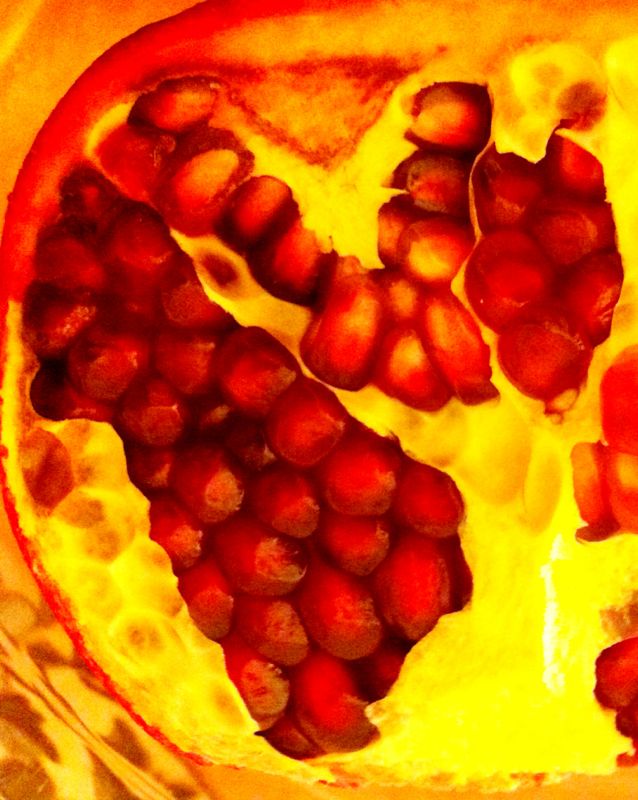
pomegranate

As I shopped this morning through the produce section of my neighborhood’s market I saw these fresh bursting red pomegranates and my taste buds started a dance! I can’t wait to introduce my little girl to this juicy mosaic so we can become pom-buddies! Pomegranates rush you burst-by-burst into a heavenly state of mind. In fact, the pomegranate is an ancient fruit mentioned in almost every religion symbolizing various positive concepts and has also historically appeared in art and medicine for centuries. Today there’s a renewed focus on researching and studying the health benefits of this fruit and the juice made from its seeds and white membrane (an even higher source of antioxidants), especially in the western world where it’s still an exotic and relatively unknown fruit in opposition to the Middle East and some Mediterranean regions where it’s taken for granted for cultivation reasons. By virtue of its antioxidant richness, the pomegranate is considered very healthy for the heart and an anticancer food. It’s also a good source of Dietary Fiber and Folate and a very good source of Vitamin C and Vitamin K. In season starting September to February, you can indulge in these sweet and tart little red gems full of juice, nutrients and energy!

Summer Soups

Foodies! Delight in the last days of summer with my selection of refreshing seasonal soups!

Soup “is the new black”! Tummy friendly as it consists mostly of cooked and/or blended ingredients, it is usually light in Kcal particularly when it’s a potage or a clear soup instead of creamy and is super nutritious since it is mostly or entirely a combination of veggies full with essential nutrients. Soup can easily replace a complete meal when it’s a combination of veggies, protein and complex carbs. While most people think of soup as a way to keep warm in the winter, soup is really fabulous all year round! What’s better than a zesty Gazpacho or a Minty cucumber with yogurt during those last days of summer?

Gazpacho

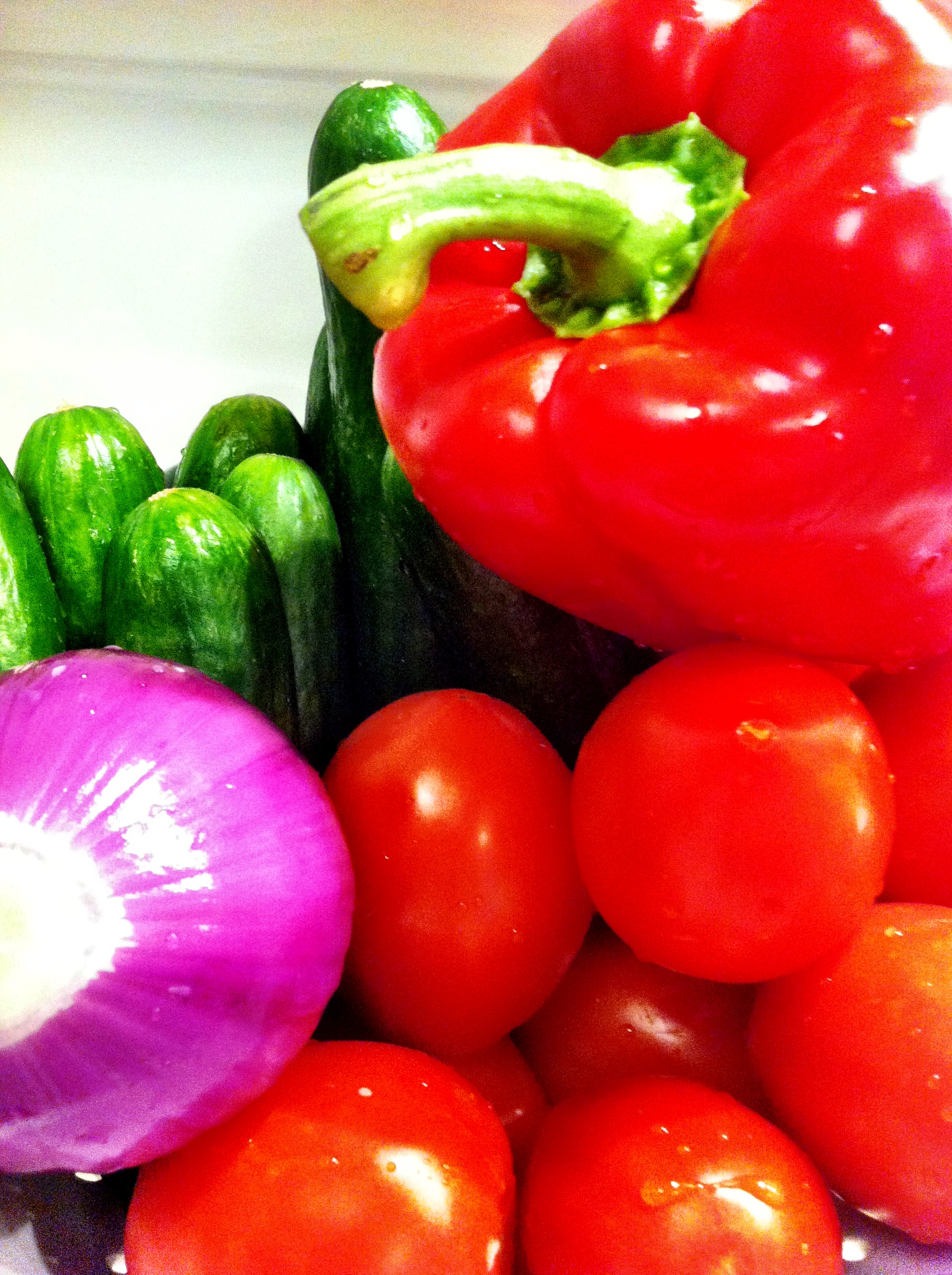
It is a soup originally from Spain prepared nowadays mainly with tomato, cucumber, red pepper and onion. It is basically a blended salad. That makes it even better than many other soups whose ingredients loose many of their nutrients in the cooking process. It’s super quick and easy to prepare if you have a blender and could be made in a big batch and stored in the fridge to be served later in many ways like an appetizer, a main course with a side or simply as a refreshing and super healthy drink.

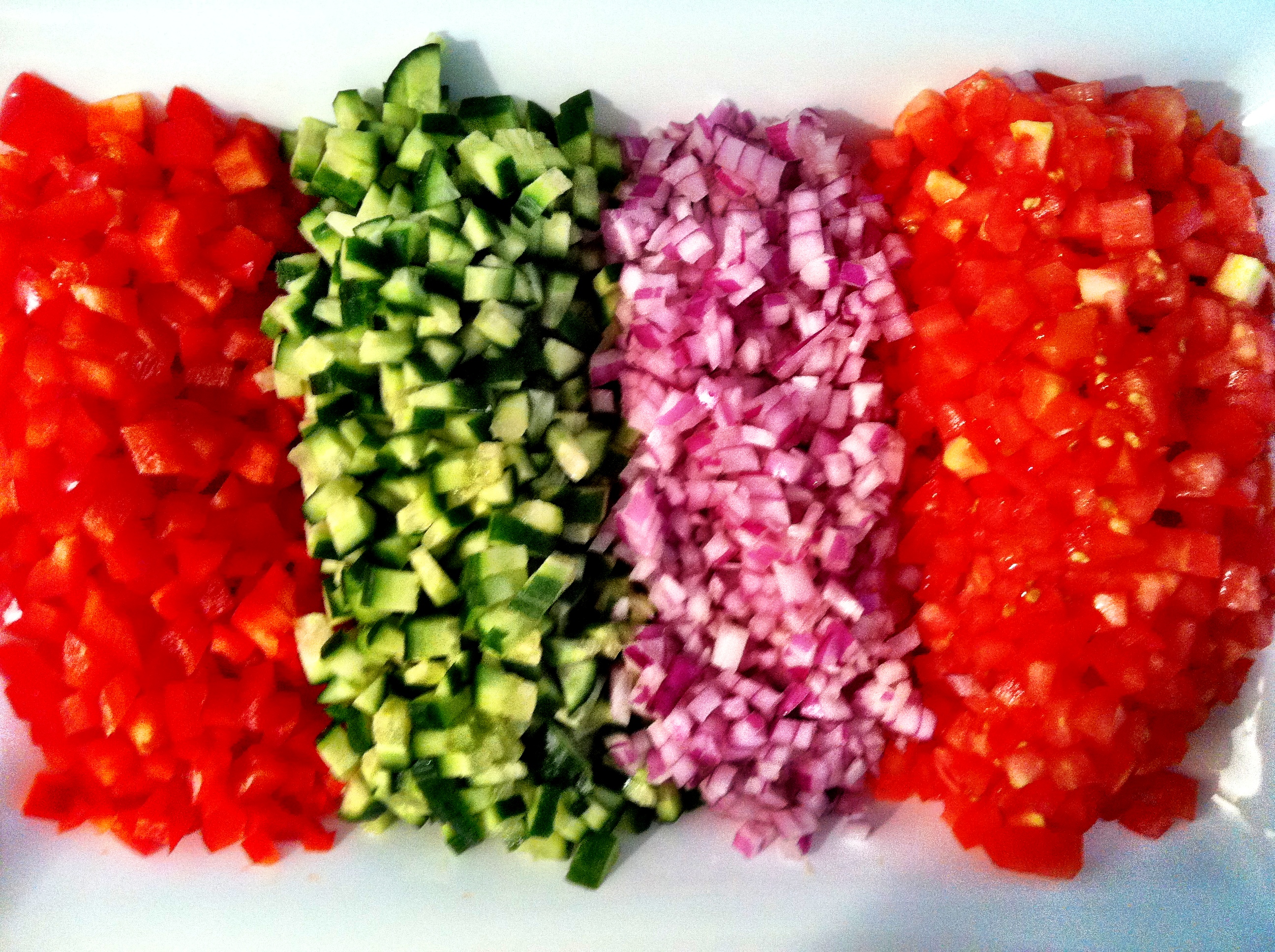
photo-21

Ingredients for 4 servings:

  • 4 medium tomatoes finely chopped
  • 2 small cucumbers finely chopped
  • ½ red pepper finely chopped
  • ½ red onion finely chopped
  • 1 small Jalapeno pepper chopped
  • 1 clove of garlic chopped
  • 700 ml tomato juice
  • Juice of 1 lime
  • 40 ml or extra virgin olive oil
  • 2 tsp of balsamic vinegar
  • 2 tsp of Worcestershire sauce
  • ½ tsp of ground cumin
  • ½ tsp of fresh ground pepper
  • Salt (optional, take into consideration that the tomato juice used covers for the salt unless it’s homemade or unsalted)

photo-22
Place ½ of the amount of the chopped tomatoes, cucumbers, pepper, onion into the blender bowl with the rest of the ingredients and mix. Let it chill in the fridge then serve topped with the rest of the chopped veggies.

Minty cucumber with yogurt

It is my favorite summer soup. Cucumber itself is very refreshing and hydrating as its main component is water (96% water). It’s also a diuretic, that means it helps flushing out water surplus and toxins. Choose this soup for stocking up on protein, Calcium and
vitamin D. Try my mom’s recipe; it’s the simplest and the easiest:

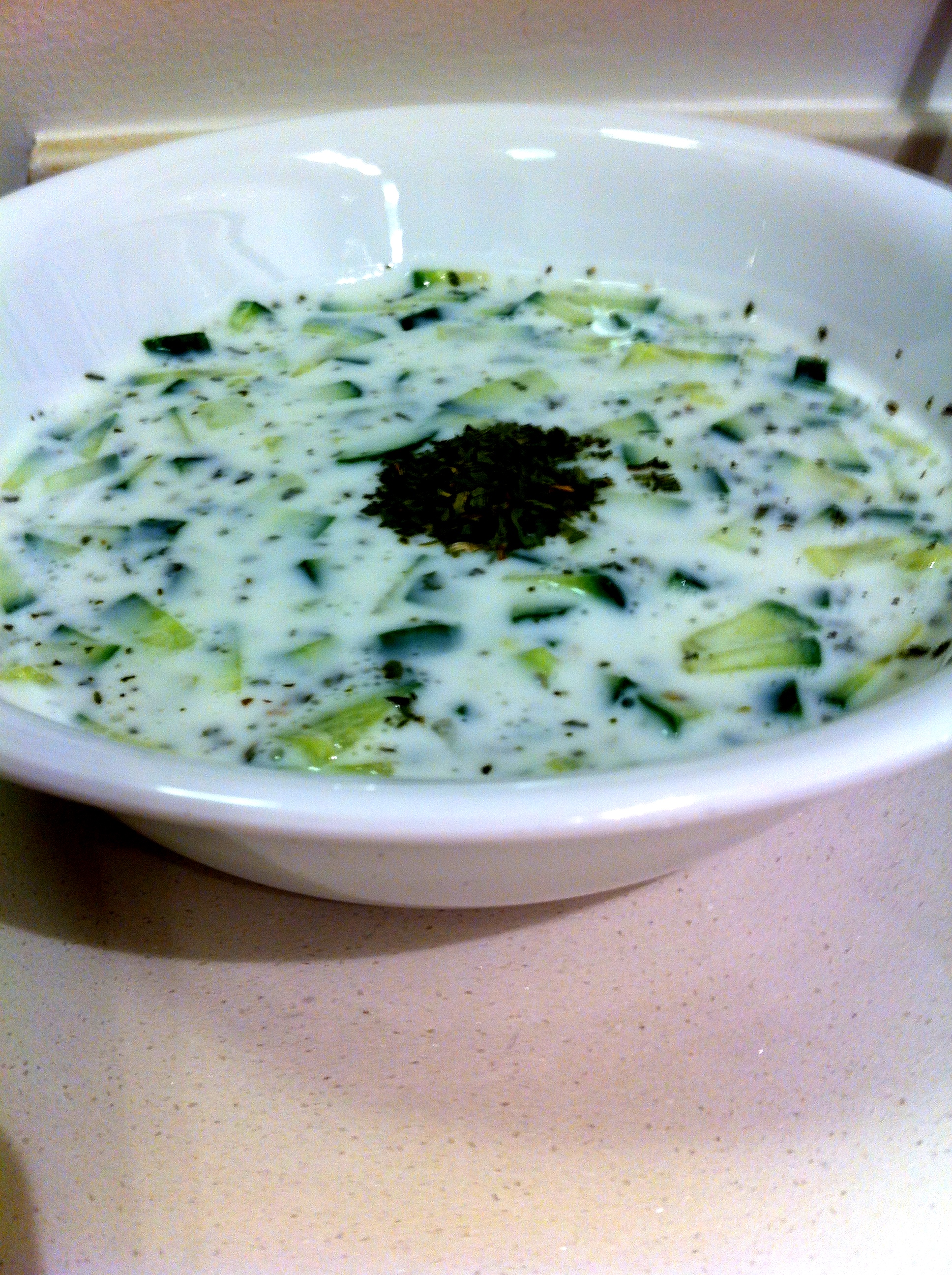
photo-20
Ingredients:

  • 1 lb (~500g) plain low fat or fat free yogurt (preferably Greek yogurt)
  • 1½ cup (~375 ml) water
  • 5 Persian cucumbers or 2 large cucumbers
  • 1-2 cloves garlic
  • 1 tsp crushed dry mint
  • ½ tsp salt

Chop cucumbers finely. I prefer to keep the skin particularly if the cucumbers are organically grown and that’s because a major part of the cucumber nutrients are found in its skin! Also the deep green color of the skin makes a great color contrast with the yogurt. Mash garlic. Add the water to the yogurt and mix to make it more liquidy. Add the cucumbers, garlic, salt and mint and mix with a spatula or a kitchen spoon. This soup can be a perfect match for a wide variety of dishes.


Farmer Market Finds

Last Saturday at Abingdon Square Greenmarket: On an attempted shopping spree in the West Village, we passed by a farmer market and the day suddenly transforms into a veggie splurge and later into a luscious dinner feast.

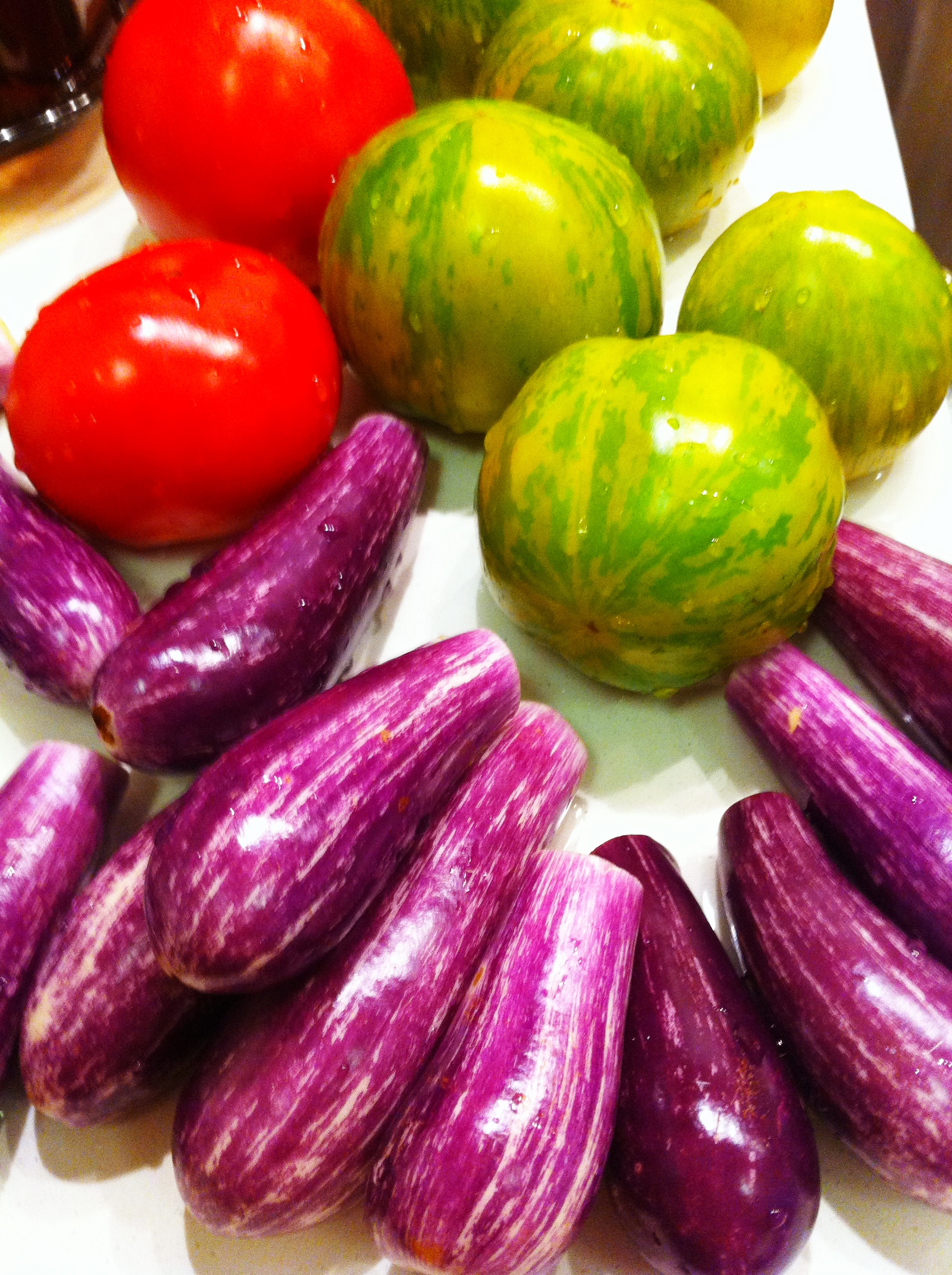
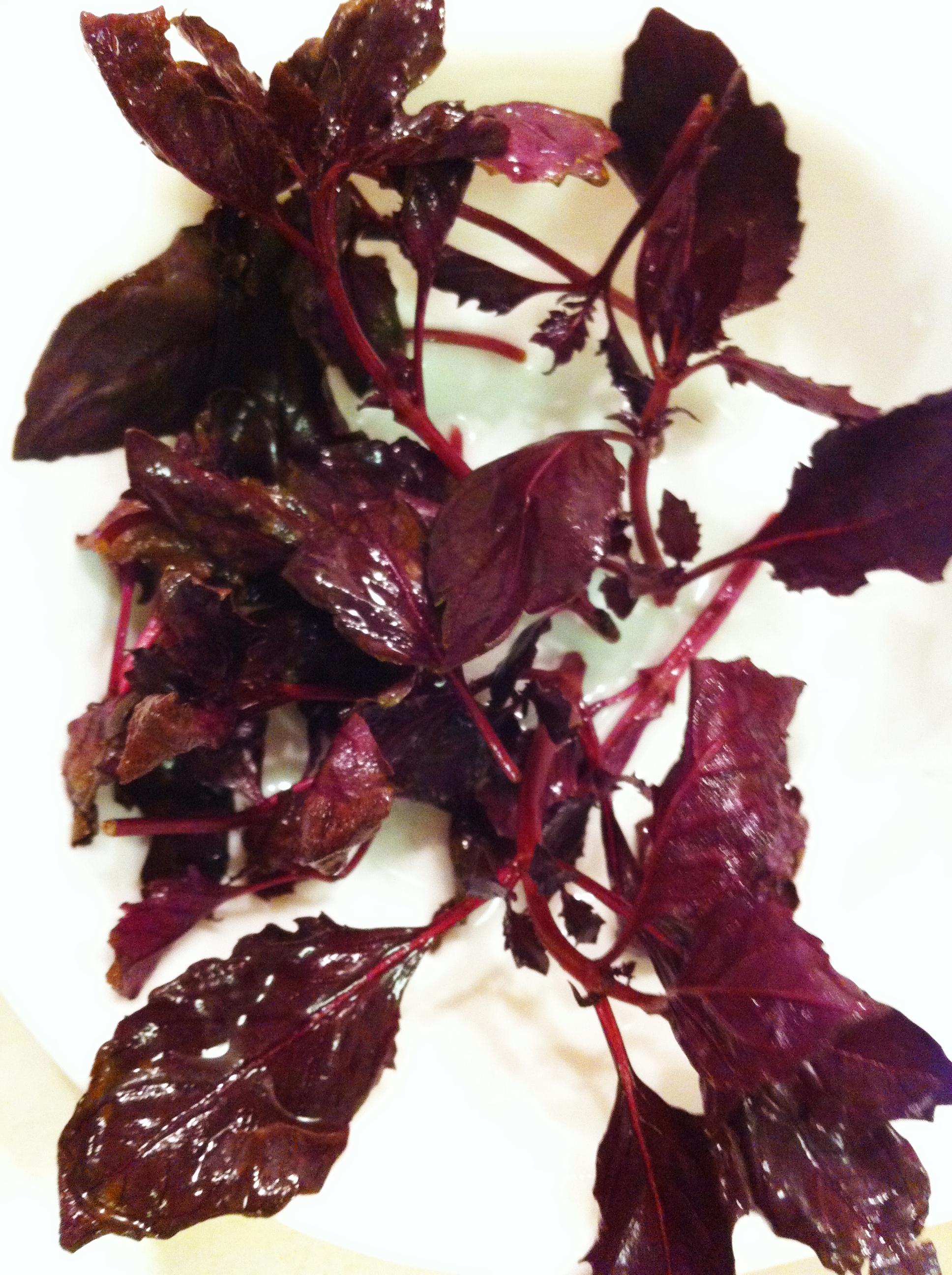
In Season now: Eggplants, sweet and sour green & red tomatoes, purple basil…excellent ingredients for a pasta primavera!

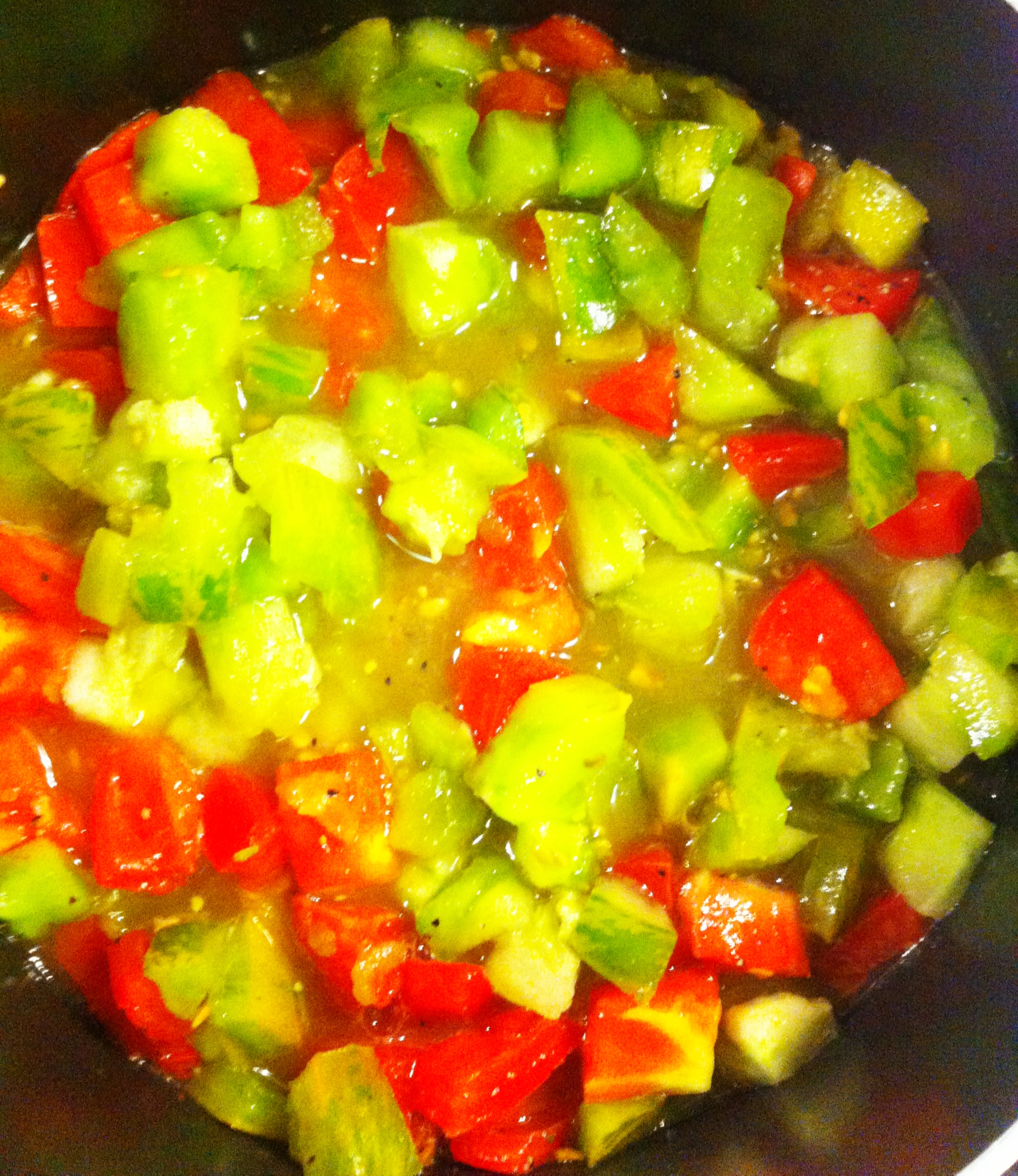
Irresistibly cute Fairy Tale eggplants - Sweet & sour green & red tomatoes

Irresistibly cute Fairy Tale eggplants – Sweet & sour green & red tomatoes

Purple basil with the most divine smell!

Purple basil with the most divine smell!

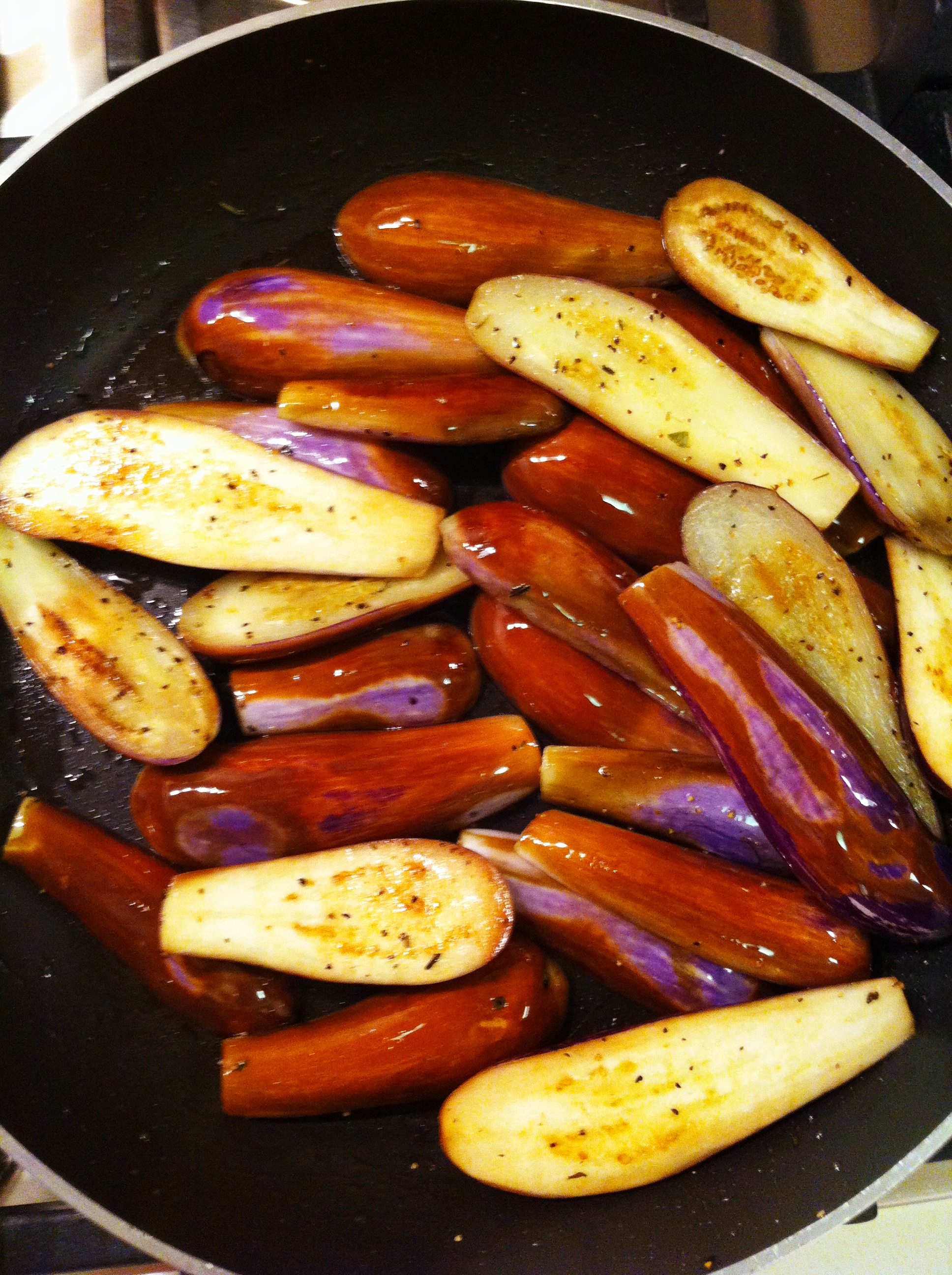
Sautéed Fairy Tale eggplants aux herbes de Provence

Sautéed Fairy Tale eggplants aux herbes de Provence

Fresh Homemade Tomato Sauce

Fresh Homemade Tomato Sauce


Yummy Figs!

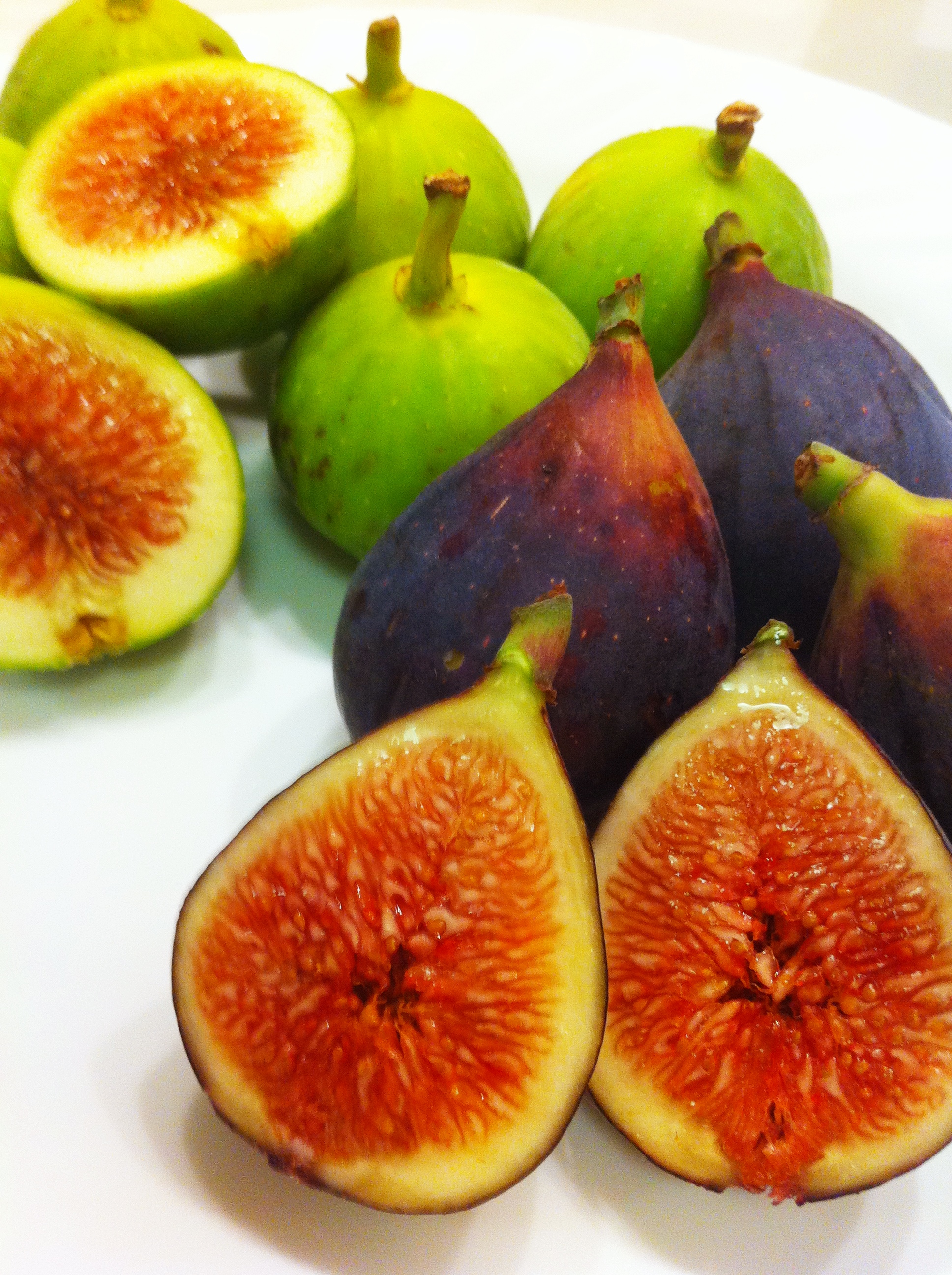
Fresh Green and Mission Figs

Fresh Green and Mission Figs

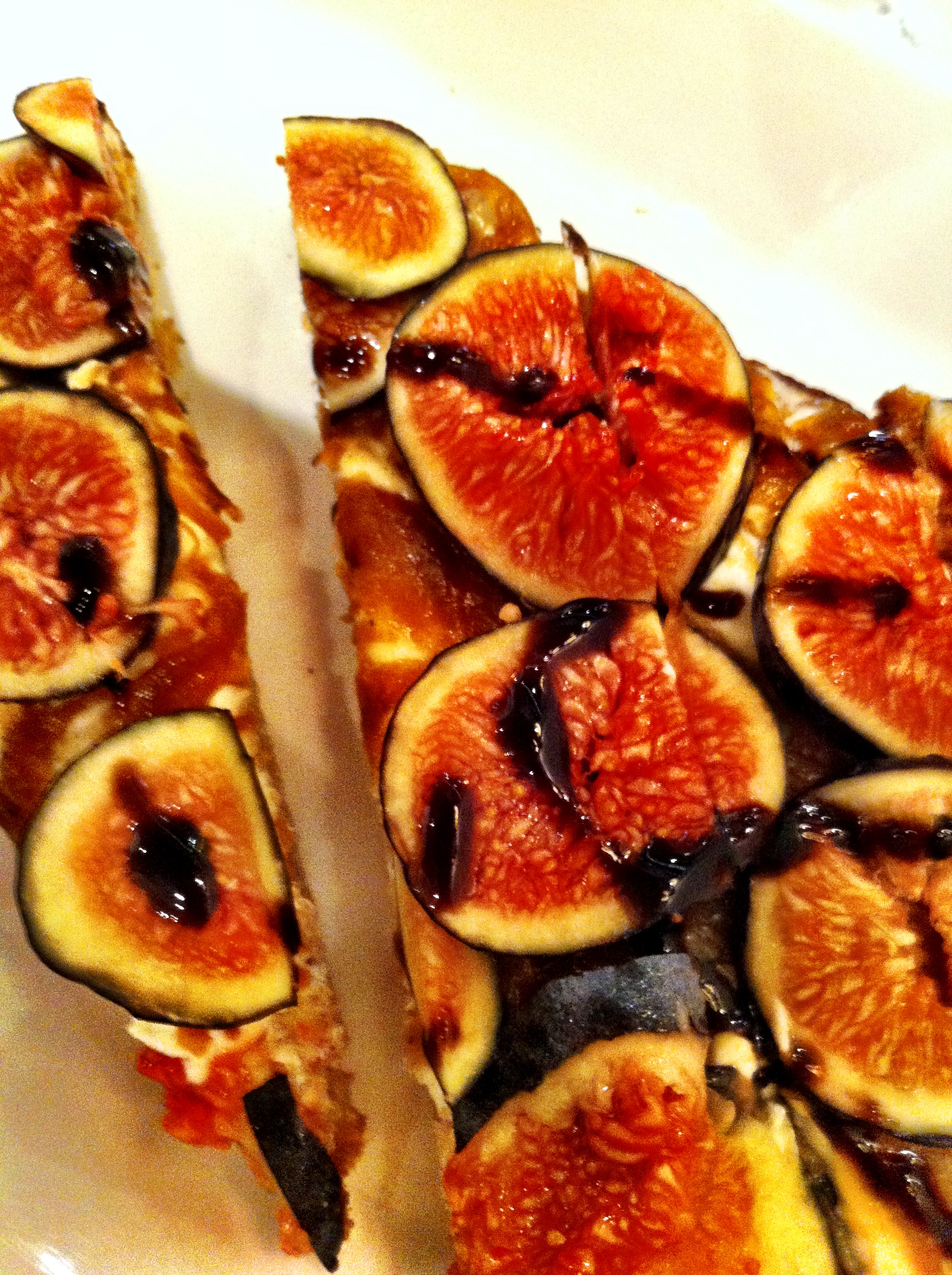
I have special feelings towards figs. This delicate fruit has a big nostalgia effect on me. Back in my childhood in my small Mediterranean village, I spent a lot of time with my brother, sister and my zillion cousins climbing a fig tree deep down my grandfather’s orchard. We played house on this tree but mostly we ate a lot of fresh green figs! These were pure happy and delicious moments. Besides my childhood nostalgia, there’s nothing like the sweet tingling taste and the beauty of a fresh fig. God is so good at designing fruits! Fig is actually known as “nature’s most nearly perfect fruit” because of its wide-ranging nutritional benefits: super high in fiber, calcium, iron and potassium particularly when it’s dried. Check this delicious in season Tartine garnished with figs that I recently had at Maison Kayser, my favorite UES brunch/lunch spot.

 Tartine Chèvre & Figues: Goat cheese, caramelized onions, fresh Mission figs, balsamic reduction


Tartine Chèvre & Figues: Goat cheese, caramelized onions, fresh Mission figs, balsamic reduction