Yogurt Buzz

photo-136

The big buzz in New York today is all about fashion week (nope New Yorkers are not convinced by the Obama-Beyoncé French rumor) but since neither the weather condition nor my own condition are allowing me to follow more closely what’s happening on the other side of the park, let’s shed the light on some other buzz dominating the Food & Nutrition milieu: Yogurt.

Yogurt’s health superpowers are getting a boost by a couple of recent studies underscoring a number of previously unhighlighted benefits:

  • Regular consumption of low fat yogurt (in replacement of less nutritious snacks) could ward off type 2 diabetes
  • Yogurt consumed as a daily food could help in shedding weight and maintaining weight loss (particularly in women)

Yogurt is therefore making its way to the top of the list of recommended foods to be incorporated in one’s daily diet. Praising yogurt however is not a new phenomenon. We’ve known for a while that probiotics (the good bacteria) in yogurt promotes digestive health.

Probiotics:

  • Improve lactose intolerance
  • Prevent or cure diarrhea and help treat several gastrointestinal and inflammatory bowel diseases
  • Fight H. pylori (a bad bacteria causing stomach ulcer)
  • Delay the development of allergies in children, decrease allergy symptoms in adults and boost the immune system
  • Play an anti-tumor role in the digestive tract which helps in preventing colon cancer
  • Lower bad cholesterol and hence the risks of heart diseases

Yogurt is also rich in calcium, an essential nutrient for bone and teeth health and also proved effective at reducing body fat. Yogurt can also provide us with vitamin D (since fortifying yogurt with vitamin D is a big trend now). Vitamin D is an essential nutrient that helps calcium to be absorbed. It is mainly provided by sunshine (few types of food contain vitamin D / such as fish, fortified milk and fortified eggs). During the winter season when your exposure to sun is minimal, it’s imperative to opt for foods rich or enriched in vitamin D. Nope, winter break sun is not enough!

When choosing a yogurt at the grocery store, focus on the fat, probiotic, calcium and vitamin D figures. Go for:

  • Low-fat (low-fat versions tend to have less added sugar than the non-fat ones)
  • Brands that state “live active cultures” to ensure that you are getting high-quality probiotics
  • 15% (or more) of the Daily Value (DV) for Calcium and vitamin D per serving
  • Plain yogurt instead of flavored versions to avoid a high amount of added sugar and artificial coloring. Mix your yogurt with fresh fruits instead.

There are so many ways to incorporate yogurt in your eating habits. I love to start my day with a bowl of yogurt, granola, some nuts and berries. I also use yogurt as a side dish with many of my cooked meals as an alternative to sauces or dressings.

Valentine is just around the corner, so treat your heart with some amour and indulge in some smoothilicious yogurt… make a habit of it and let it be your daily love declaration to your heart!

Happy Valentine xoxo

Produce from Paradise

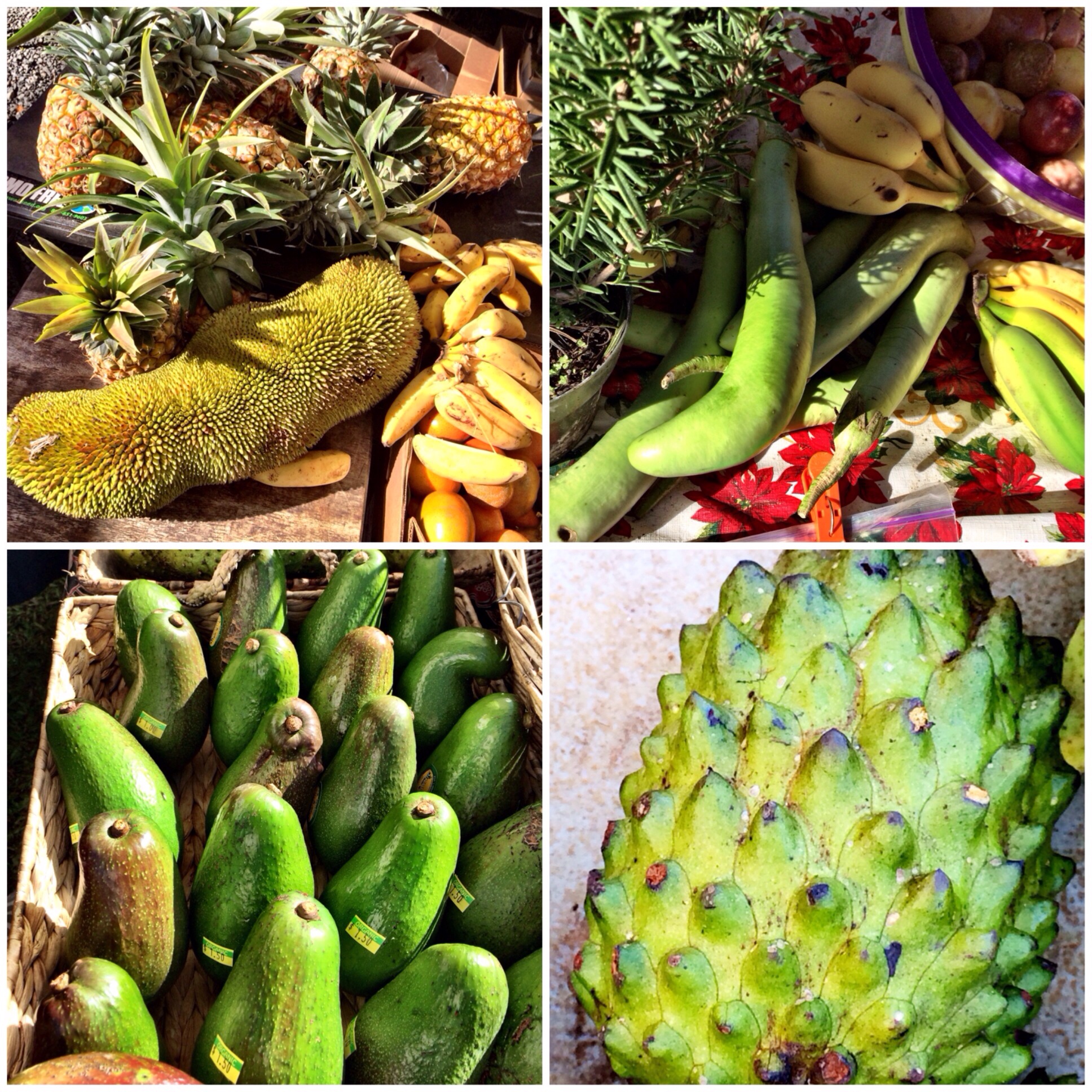
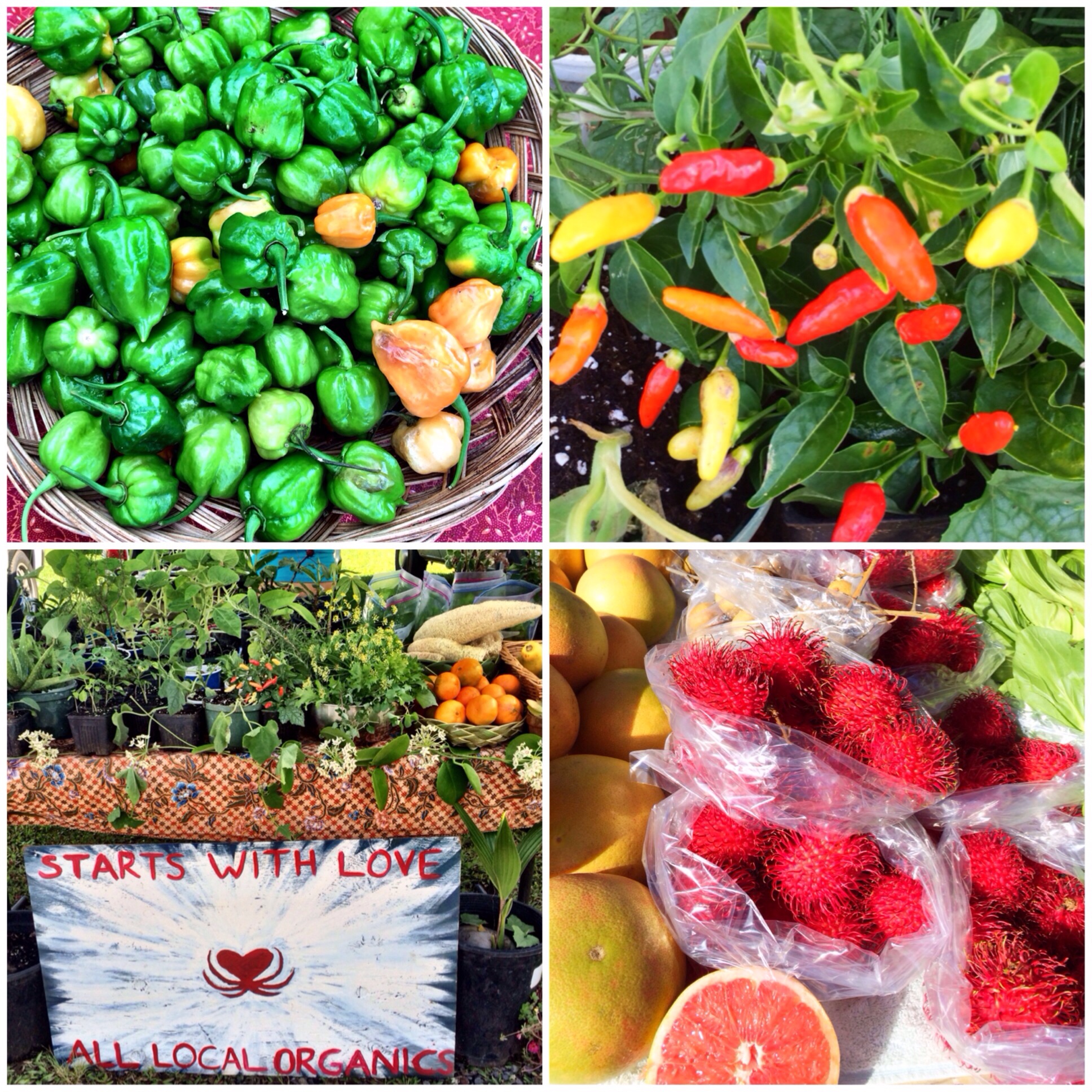
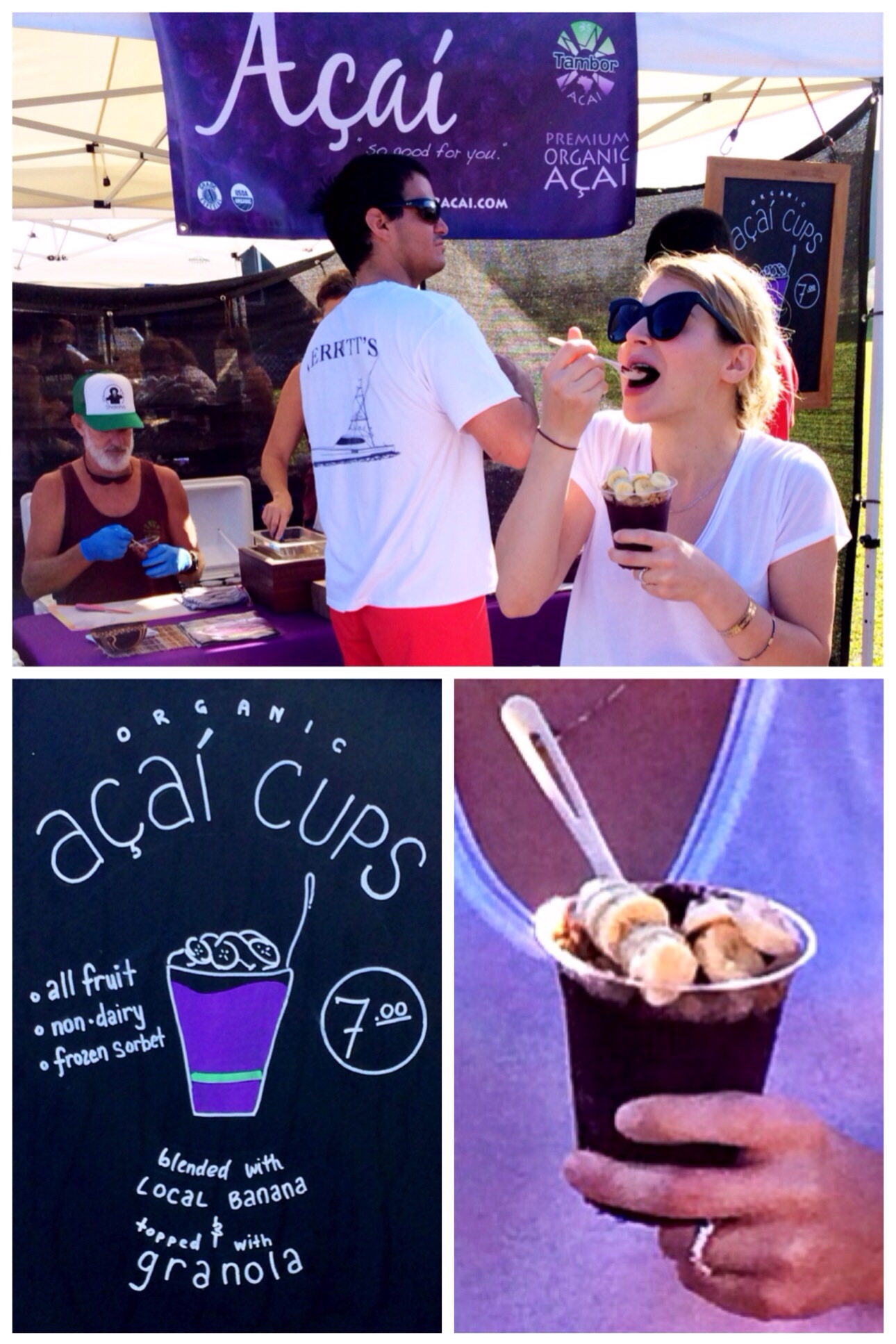
Stopped by a farmers’ market in the small town of Hanalei (Kaua’i island) yesterday and indulged in some exotic organic local produce. The fruits here tasted phenomenal! The main event was my açaí breakfast cup, a blend of nutrients straight from heaven! Açaí is a berry rich in antioxidants and fiber which makes it a heart-healthy and anti-cancer superfood.

20140112-063833.jpg

20140112-063853.jpg

20140112-063925.jpg

20140112-063943.jpg

20140112-063959.jpg

20140112-064025.jpg

20140112-064058.jpg

20140112-064115.jpg

Bean Medley

picstitch-69

Trying to get off the holidays’ rush, lack of structure and overindulgence wave and finding it a bit overwhelming to get back to your normal routine? Well, me too!

I usually like to take it easy the couple of days after the holidays, so I make sure to have a smooth transition into my usual routine to avoid post-holidays blues. At the same time however, I try not to stall too much in getting my family back onto its normal schedule.

My first fix is a healthy, cleansing and simple meal. By simple I mean no trip to the grocery store and only minimal preparation. So I dig into my pantry and I make the best out of it. Here’s a recipe that helps put me back in a supreme state of mind, ready to hit all my to dos for the rest of the week!

 “Do what you can, with what you have, where you are.” Roosevelt

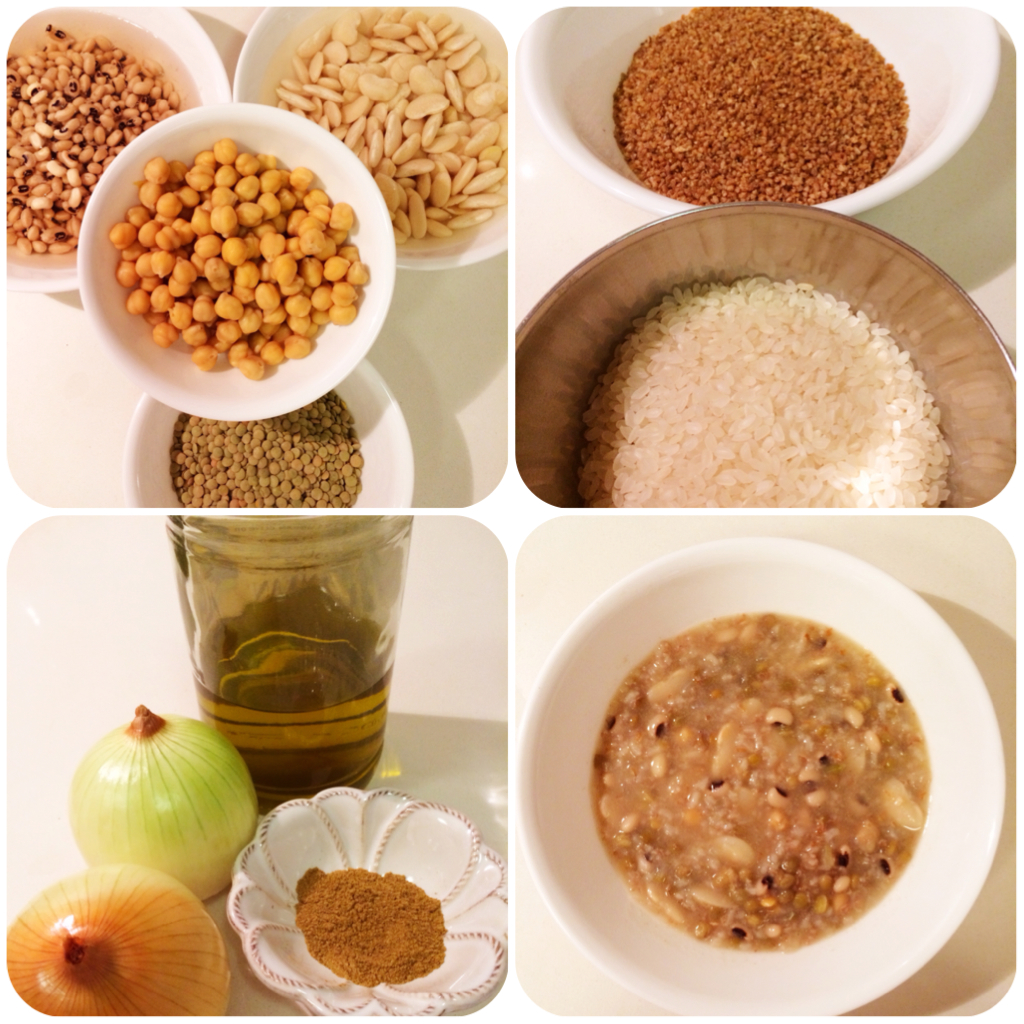
Bean Medley (or Makhlouta) is a soup gathering the essential groups of food, making it a complete meal with nutrient-rich ingredients, mainly a fiber mine! It’s simply a mixture of 4 or 5 types of beans (white beans, kidney beans, lentils, chick peas and black eyed peas), grains (bulgur or wheat and rice), onion, a bit of olive oil or canola oil and spices. You can make your own mixture, depending on what you find in your pantry.

Here’s my recipe for 6 servings

  • ½ cup large white beans
  • ½ cup black eyed peas
  • ½ cup lentils
  • ½ cup chickpeas
  • ½ cup bulgur
  • ½ cup rice
  • 8 cups water
  • 1 finely chopped onion
  • 4 Tbsp lemon juice
  • 1 Tbsp canola oil
  • 2 tsp ground cumin
  • 1 tsp salt
  1. If you’re using dried beans, soak them separately in water overnight (except lentils)
  2. In a pot, heat the canola oil, add the onion and stir fry until browned
  3. Add the rest of the ingredients (except the lemon juice) and let them cook on medium heat for 30-45 minutes or until the beans are tender
  4. Add the lemon juice and let it cook on low heat for 5 minutes
  5. Serve hot (This soup is thick as the grains absorb most of the added water)

Mama’s Perfect on the Go Snacks

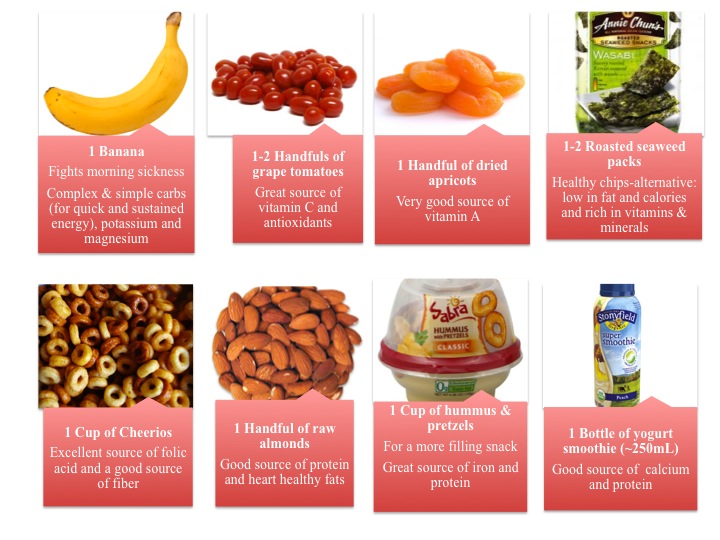
Halfway through pregnancy, things are getting more and more busy for me. Therefore, I’m more often on the go and it’s essential for me not to skip a meal and to have healthy snacks to fuel my baby’s rapid growth. Mini-meals are particularly tempting because discomfort becomes more common now so I’m opting for smaller, more frequent, snack-like meals instead of the usual 3 meals. Here are my picks of nutrient-rich, portable and hassle free snacks for busy preggos on-the go, perfect for popping in your mouth, munching or biting on when hunger strikes!

Perfect pregnancy portable snacks with suggested portions. Mix 2 or 3 of those and you've got a complete meal!

Perfect pregnancy portable snacks with suggested portions. Combine 2 or 3 of those and you’ve got a complete meal!

0 Trans Fat in 2014!

Trans fatThe US Food and Drug Administration (FDA) announced recently an upcoming ban on artificial trans fat use in the food industry considering it a public health menace in light of a significant increase in heart diseases, and in the hope of preventing an additional 7,000 deaths from heart disease each year and up to 20,000 heart attacks each year.

Now that’s an AMAZING health news to wind-up 2013 with!

While waiting to see how the FDA’s preliminary resolution will unfold, be an avant-gardist and let this be your own 2014 resolution! Making a resolution to opt for a “0 trans fat” eating habit has a twofold benefit: while protecting your body from the most harmful, high-cholesterol fat, a cut on trans fat also means a cut on many empty calories! So, forget about all those unrealizable, extreme diet resolutions and have this one health worthy objective.

Now how to track and avoid trans fat?

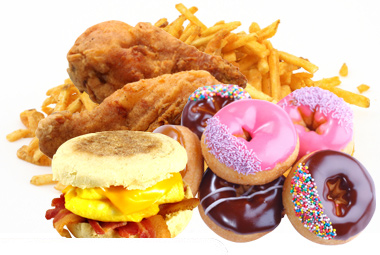
  • While the natural type of trans fat occurs minimally in foods (some animal products like meat and dairy) and has so far been proved to have no major health concerns, it is the artificial trans fat that is behind obesity and heart diseases, the one created through a process called hydrogenation. This process transforms liquid fats (oils) to a more solid form, increasing their shelf-stability. In recent years, many food manufacturers, fast food chains and restaurants, reduced or eliminated the use of partially hydrogenated oil (PHO) and in consequence the trans fat content in their products has decreased. However trans fat can still be found in various processed foods.
  • Foods that might contain trans fat: cookies, biscuits, crackers, chicken nuggets and wings, muffins, pizzas, garlic bread, hard taco shells, fries, donuts, vegetable shortenings and stick or hard margarine, microwave popcorn, croissants, coffee creamers, ready to use frostings and some other processed foods, mainly snack foods, baked goods and frozen foods.
  • Most countries list trans fat content on nutrition labels. So checking the nutrition label is one big step to avoid that villain fat.
Nutrition label Source: American Heart Association

Nutrition label
Source: American Heart Association

  •  Note that in the United States products that contain less than 0.5 grams of trans fat per serving, can indicate 0 grams trans fat on the label. Be aware of this disguise: If you eat multiple servings of foods with less than 0.5 grams of trans fat, you end up with a high total amount of trans fat. So if a label lists 0 trans fat, look at the Ingredients List for the words “partially hydrogenated”, “margarine” or “shortening”.
Ingredients list Source: American Heart Association

Ingredients list
Source: American Heart Association

  •  In some places, like New York City, restaurants are not allowed to use trans fat. Wherever you are, to make sure you’re escaping trans fat when you’re eating out, one strategy is to avoid fried foods and desserts and to opt for lower-fat dishes like stir-fried, barbequed or grilled and fresh fruits or sorbet. You may also consider asking the server, the chef, or the manager if the restaurant is a trans-free.

Bottom line, the more you opt for fresh or un-processed foods the less chance you have to encounter trans fat. Further, keep in mind that the very best way to keep control over your level of trans fat intake is to trust your cook and often the most reliable available person for that will be yourself!

Now, on a more personal note, I hope my husband’s secret affair with the Cronut (which I’ve uncovered only recently!) will end in 2014!

While a Dominique Ansel Bakery in New York  created the first Cronut in the world, it might not contained trans fat due to the strict regulations of trans fat use in NYC, but that was undoubtedly replaced with a whole lot of saturated fat which is also a high cholesterol, high calorie harmful fat. Now with the Cronut becoming viral around the world, it could be packed with trans or saturated fat or both, but what is for sure is its crazy fat/sugar/calories contents, and that's why some call it a "nutritional nightmare"!

While a Dominique Ansel Bakery in New York created the first Cronut in the world, it might not contain trans fat due to the strict regulations on trans fat use in NYC, but that was undoubtedly replaced with a whole lot of saturated fat which is also a high cholesterol, high calorie harmful fat. Now with the Cronut becoming viral around the world, it could be packed with trans or saturated fat or both, but what is for sure is its crazy fat/sugar/calories contents, and that’s why some call it a “nutritional nightmare”!

Mama’s Remedy

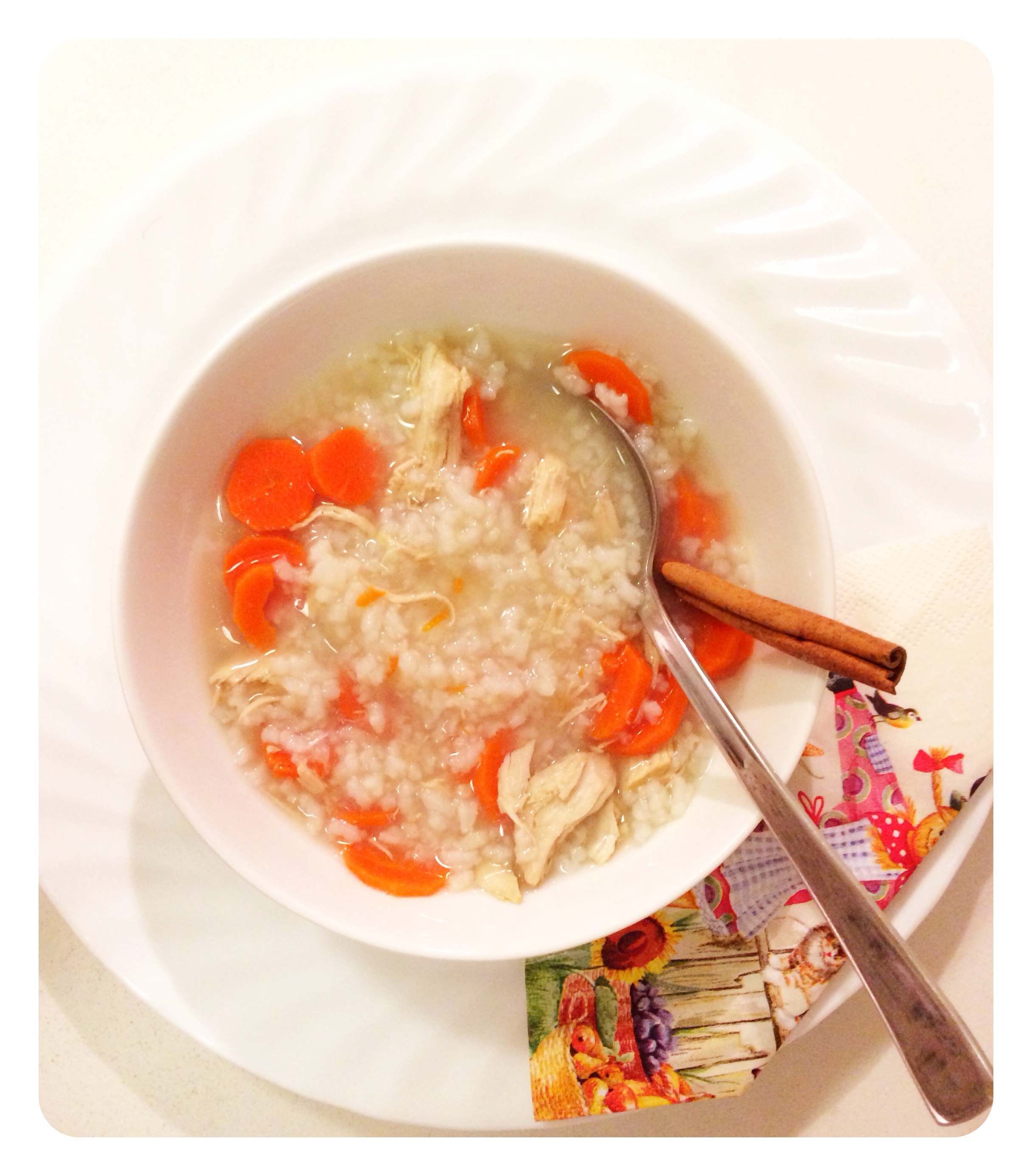
Chicken Soup

Chicken Soup

It’s flu season and the season for the debate about the effectiveness and safety of the annually changing flu vaccination, prescribed antiviral drugs and over-the-counter pain relievers. Unless you’re at a high risk of developing a flu complication (young children, pregnant women, older adults and people with chronic illness and weakened immune system), hominess is the best and safest way to let your flu fly away without subjecting yourself to any potential side effects.

So take your flu as an excuse to get cozy and snuggle in your blanket for a day or so in the cold weather and try to recharge body and mind generally! While fluid drinking is important to keep you well hydrated, there’s nothing that could replace mama’s go-to sick-day-food: the one and only magic chicken soup! It might not kill your virus right away but it surely comes with the best remedies that help your body fight the virus away: nourishment and love!

My mama’s chicken soup recipe

Ingredients (for 6 portions):

  • 2 skinless, boneless chicken breasts
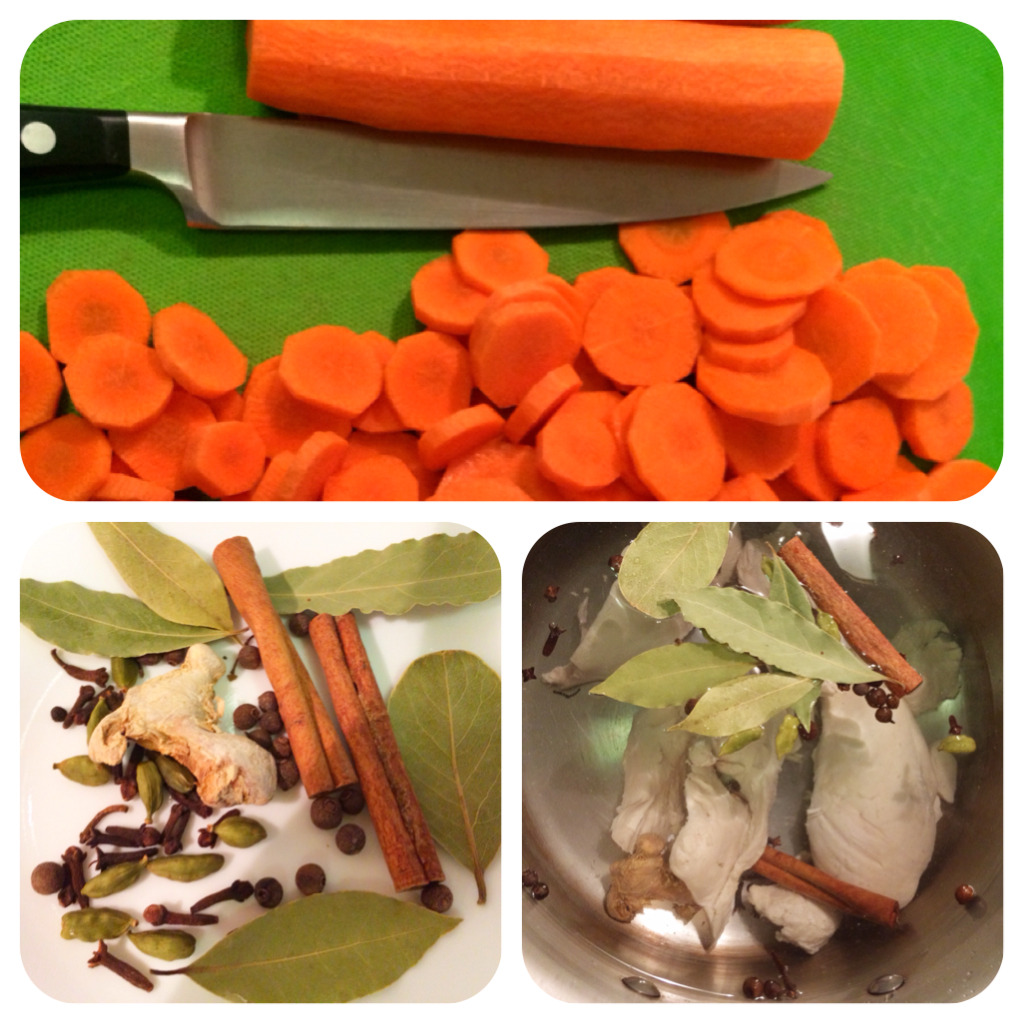
  • 4 medium carrots cut in thin rounds
  • ½ cup of sushi or Egyptian rice
  • Spices for flavoring the chicken: 2-4 bay leaves, 1-2 cinnamon stick, ginger root, whole peppercorns, whole cloves and whole cardamoms
  • Water
  • Salt (optional)

Preparation Steps:

  1. Place chicken in saucepan. Add water to cover chicken.
  2. Bring to boil on medium-high heat or cook for 15-20 minutes until the chicken is no longer pink.
  3. Remove chicken form saucepan and wash it with cold water. Disregard boiling water.
  4. Add chicken, spices and cold water in saucepan and bring to boil again or cook for 15-20 minutes.
  5. Drain broth and keep it to be used as the soup fluid.
  6. Disregard spices and shred chicken into small pieces.
  7. Add broth and carrot to saucepan and bring to boil. Add shredded chicken and rice and let it cook on low heat for 10-15 minutes.

Enjoy the warmth and the soothing flavors of this hearty soup…and get well soon!

Chéri Chicory

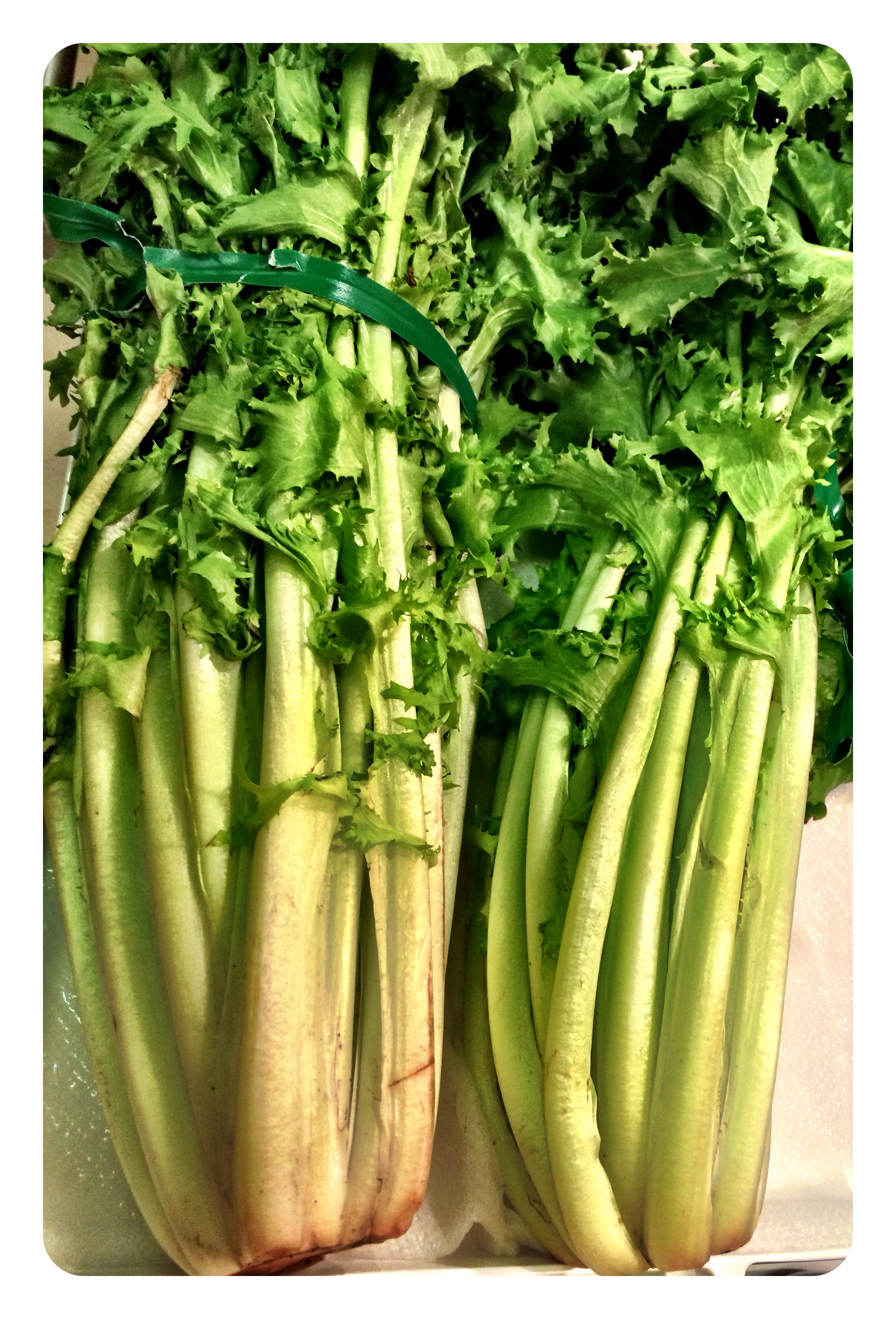
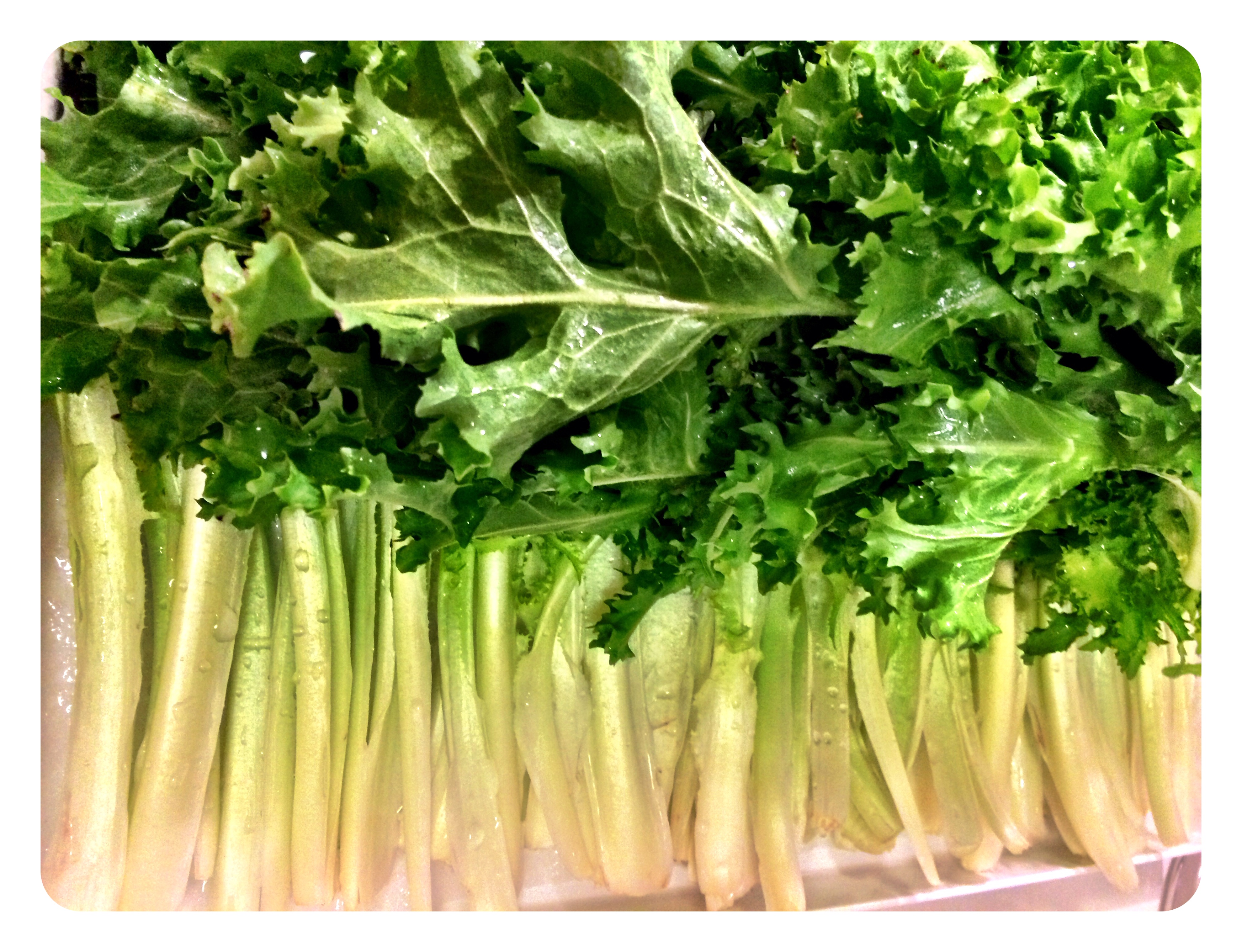
Chicory

Chicory

Lately, chicory is on my mind as I crave a good vegetarian winter dish!

I don’t find chicory very often in stores here, but when I do I take great advantage: I eat it raw as a snack! Now you’re probably imagining a farm pet munching on a grassy meadow, that’s not exactly the case, although I don’t hate the bitterness of its raw leaves, I only snack on the un-leafy stem part of chicory, which is less bitter, crunchy and has a rich taste that makes celery so dull in comparison (you’re probably still imagining a munching pet; my husband often tells me that I should have been born as a bunny, I take that).

photo 2

Chicory – Leaves and stems separated
While leaves can be used for cooking or in salads, stems are a great, crunchy and refreshing snack.

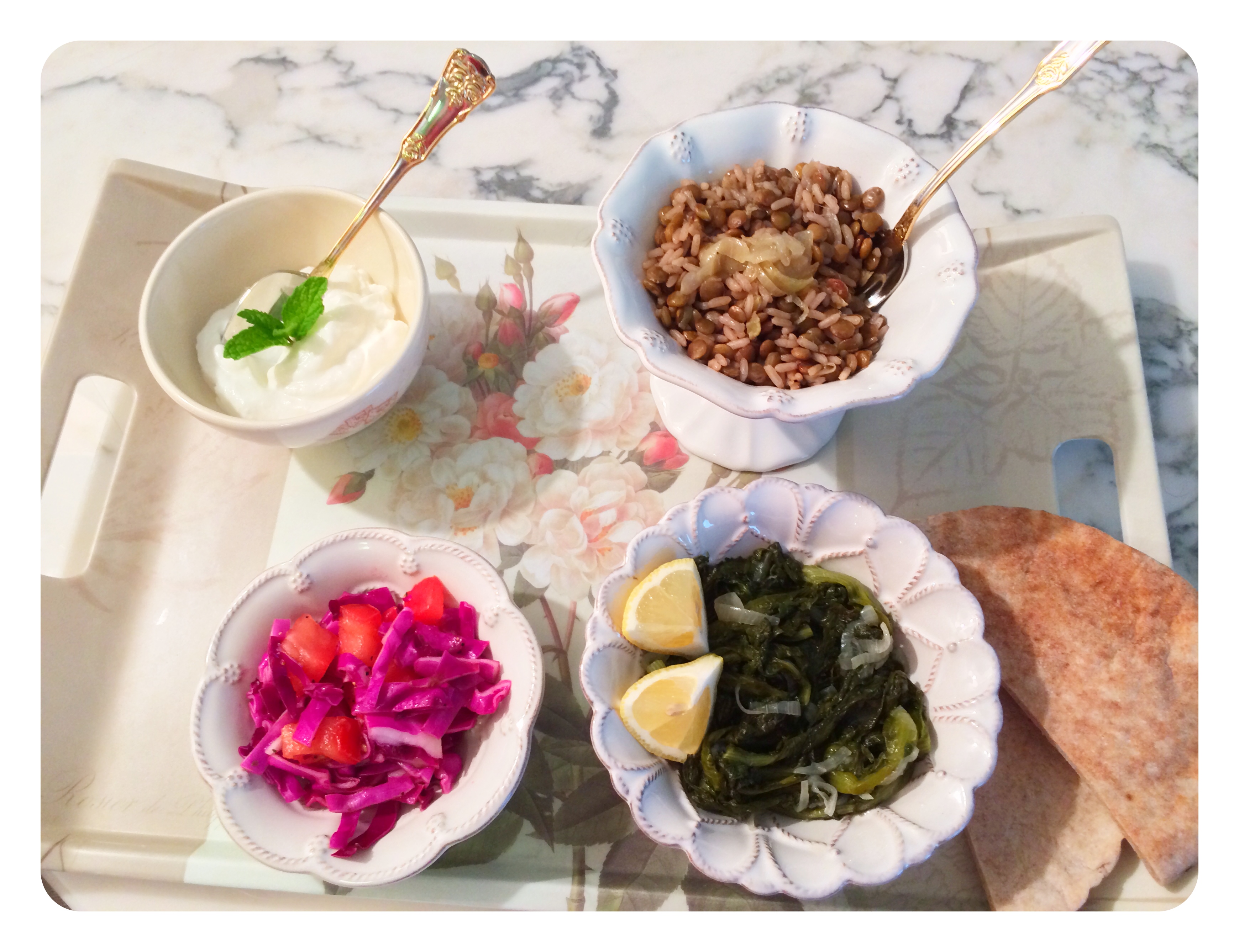
I also prepare chicory as a salad with a light, homemade vinaigrette (olive oil, lemon juice and herbs). However, the ultimate way to really savor the best of chicory is to cook it for a short time in boiling water then sauté it with caramelized onions and lemon juice… so yummy with pita bread!

photo 1

A popular countryside vegetarian meal in the Middle East
An assortment of sautéed chicory or dandelion with pita bread, cabbage-and-tomato salad, lentil-and-rice pilaf and greek yogurt

Chicory is a preferred ingredient in Mediterranean cuisine. Wild and cultivated varieties are both popular. They are mainly used in salads nevertheless they can be a perfect replacement to any leafy vegetable in many cooked dishes. From Provence to the Middle East recipes abound and vary but chicory’s draw is the same: an appetizing taste, a medicinal character (detoxing, diuretic and tonic) and a great nutritional content. Chicory is an excellent source of vitamins and minerals mainly folic acid, vitamin A, potassium and vitamin C.

Coffee, Teas and Tisanes

Green tea

Green tea

You’re pregnant, trying to get pregnant or you’re breastfeeding and wondering if it’s still safe to rise and shine with your usual morning coffee, or if you can still delight in your afternoon tea or savor your comforting bedtime herbal tea?

Here are some facts:

  • Coffee and non-herbal tea during childbearing (conception, pregnancy and breastfeeding):
Cappuccino

Cappuccino

Coffee and non–herbal teas (like black and green tea) contain high amounts of caffeine. There’s still not enough data about the safety of caffeine for an embryo, a fetus and a newborn. Caffeine ingested by a pregnant woman gets to her bloodstream, can reach the placenta and therefore crosses to the fetus’ blood. It can also get to the breast milk. It’s best to avoid caffeine during those periods or to minimize your intake to no more than 300 mg/day, which is about 2 servings of coffee, tea or other caffeine containing drinks like soda (cola), energy drinks and maté. Decaffeinated versions could be an alternative to regular coffee and teas since they contain a low amount of caffeine.

  • Herbal teas during childbearing:
Herbal tea

Rosehip tea

Herbal tea or tisane is a tea that generally doesn’t contain caffeine and is made mostly from an herb or could be a blend of different types of herbs, spices and other plants.

Although natural generally rhymes with something good and that’s why a lot of brands try to use that term in marketing their herbal products, it is not a synonym of safe. Natural herbs can sometimes have a drug-like effect on our body. There are so many types of herbs on the market, few of them are scientifically studied and even less are tested for their hazardous effects during pregnancy and breastfeeding. Also herbs sold in pharmacies and health stores are still not regulated by health agencies and so there’s no guarantee of their safety, effectiveness and purity. Hence, it’s best to be cautious when opting for a cup of tisane. Here are some options of herbal teas that are considered safer than others but should also be consumed in moderation (2 cups/day): ginger, bitter orange, citrus peel, echinacea, peppermint, red raspberry leaf, rosemary and rosehips.

In moderation and with a bit of care, keep on relishing your little pleasures!

Beat the Cold with Beet!

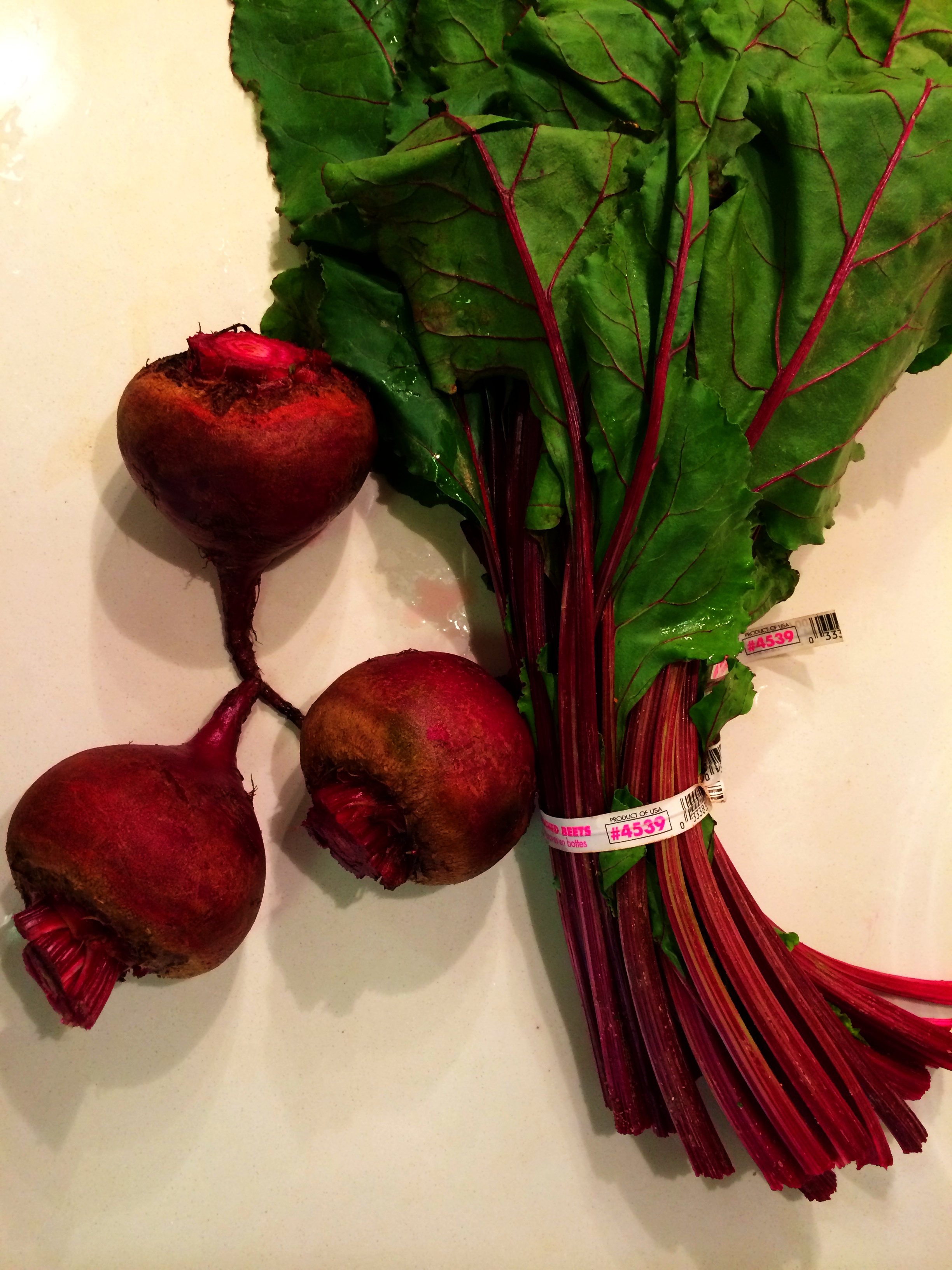
beet

Did you know?

  • Beet is not only used to produce table sugar, it is also a delightful addition to your menu
  • Its remarkably vivid color isn’t only perfect for a bloody Halloween, but it’s also an indication of its powerful antioxidant and pigment, betalain
  • You can eat it all: roots, leaves and stems and benefit from all the nutrients (mostly vitamin A, vitamin K and phytonutrients with very strong antioxidant power)

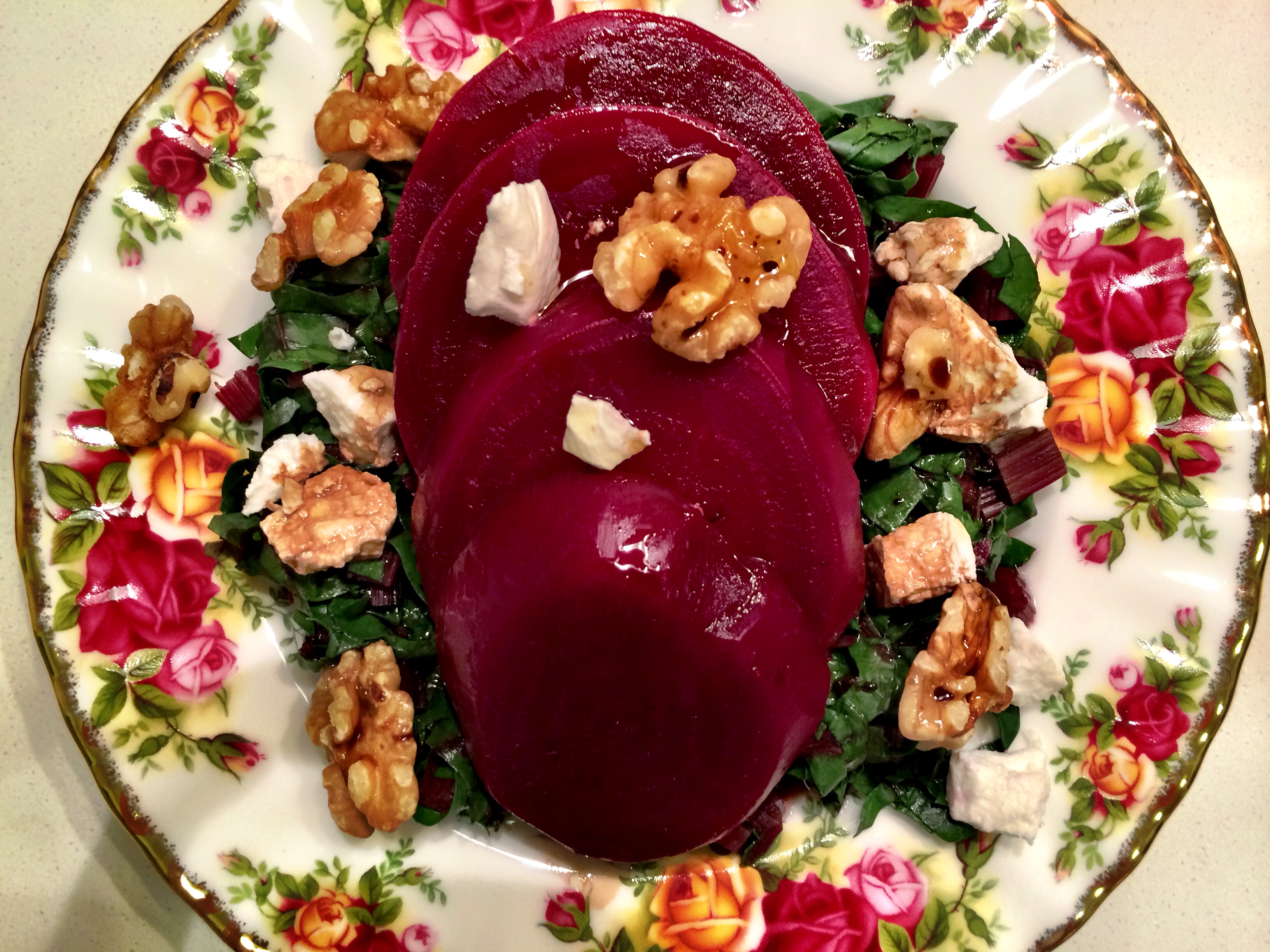
Try this succulent warm salad, my latest experiment with beet:

Ingredients:  -Boiled beetroots -Raw or steamed chopped beet leaves and stems -Sprinkle of goat cheese and walnuts  -Drizzle of balsamic vinegar and olive oil

Ingredients:
-Boiled beetroots (preferably served warm)
-Raw or steamed chopped beet leaves and stems
-Sprinkle of goat cheese and walnuts
-Drizzle of balsamic vinegar and olive oil